
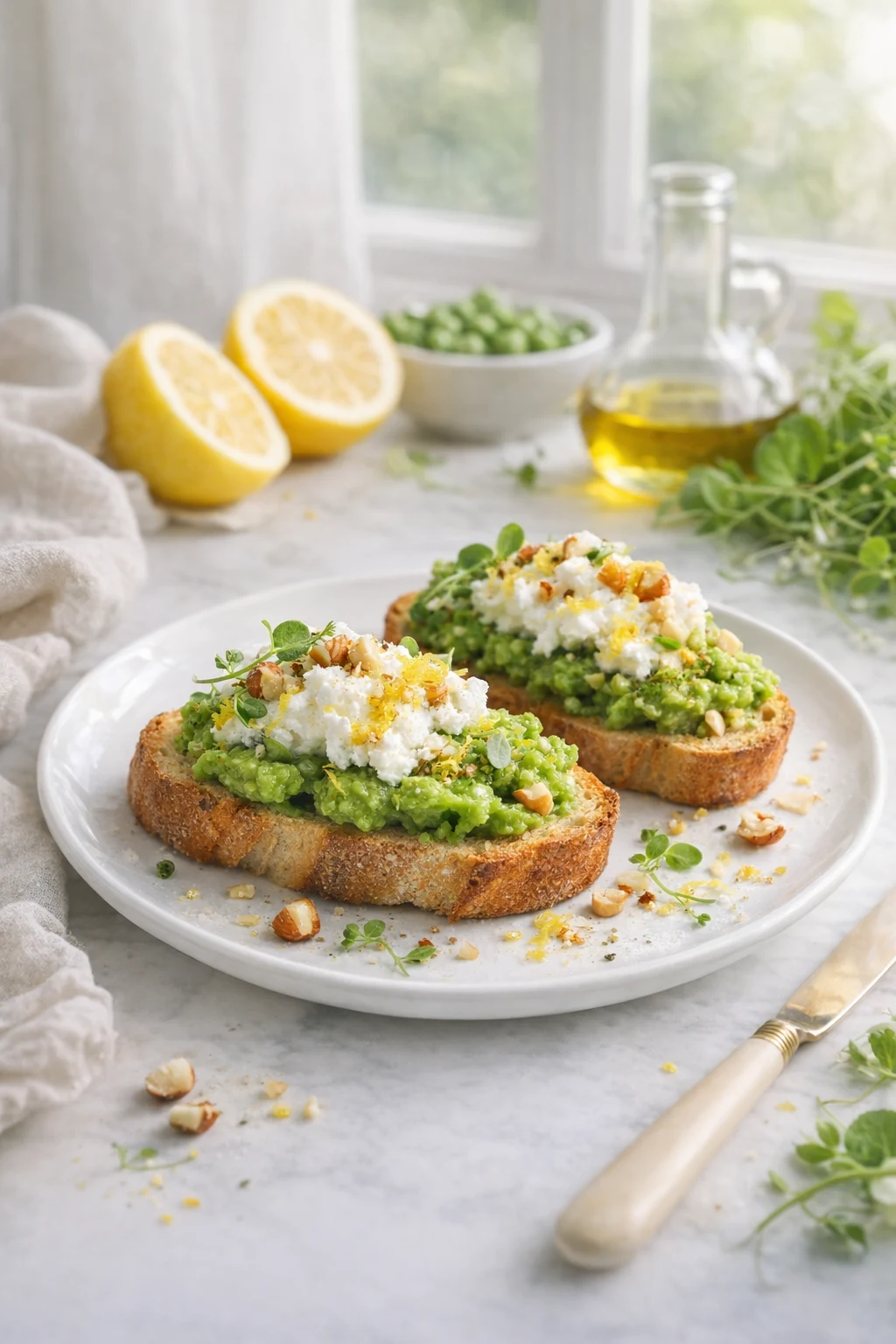
Spring pea and ricotta crostini is the kind of appetizer I reach for when I want something that looks put-together but takes almost no effort. I started making these a few years ago for a casual dinner party in April when peas were everywhere and I needed something to set out while the main course finished. They disappeared faster than anything else on the table.
The base is toasted baguette, crisp and golden. On top goes a quick blitzed pea mixture with Parmesan, garlic, and olive oil, then a spoonful of creamy ricotta, a scattering of toasted hazelnuts, and fresh lemon zest. Each bite has crunch, creaminess, a little heat from the chili flakes, and that bright pop of pea flavor that’s unmistakably spring. You can have everything ready in about 20 minutes. The pea mixture can be made ahead, which makes this even easier when you’re hosting. These spring pea crostini are light enough to open a meal without filling anyone up too early.
Ingredients
For the Crostini
- 1 baguette, sliced diagonally into 1/2-inch pieces (about 20 to 24 slices)
- 2 to 3 tablespoons extra virgin olive oil, for brushing
For the Pea Mixture
- 285g (10 oz / 2 cups) frozen peas, defrosted and drained of excess water
- 1 small garlic clove
- 1/2 cup grated Parmesan cheese
- 3 tablespoons extra virgin olive oil
- 1 teaspoon kosher salt
- 1/4 teaspoon freshly ground black pepper
- 1/4 teaspoon chili flakes or red pepper flakes
For Assembly
- 1/2 cup full-fat ricotta cheese
- 1/2 cup hazelnuts, toasted and finely chopped
- 1 lemon, zested
- Extra chili flakes, a drizzle of olive oil, or fresh mint leaves (optional, for finishing)
How To Make Spring Pea and Ricotta Crostini
- Preheat the oven to 400°F (200°C). Line a large baking sheet with parchment paper or leave it unlined.
- Slice and brush the baguette. Cut the baguette diagonally into 1/2-inch slices and arrange them in a single layer on the baking sheet. Brush the tops lightly with olive oil using a pastry brush or the back of a spoon.
- Toast the baguette slices. Bake for 8 to 10 minutes until the edges are golden and the tops are lightly crisp. Keep an eye on them after the 7-minute mark as oven temperatures vary. Remove from the oven and let them cool slightly on the pan. They’ll crisp up a bit more as they cool.
- Toast the hazelnuts (if not already done). Spread the hazelnuts in a single layer in a dry skillet over medium heat. Toast for 3 to 4 minutes, shaking the pan occasionally, until golden and fragrant. Transfer to a cutting board, let them cool for a minute, then chop finely. Set aside.
- Make the pea mixture. Add the defrosted, drained peas to a food processor along with the garlic clove, Parmesan, olive oil, salt, pepper, and chili flakes. Pulse 6 to 8 times until the mixture is roughly blended but still has some texture. You want it chunky and spreadable, not completely smooth. Taste and adjust seasoning.
- Prepare the ricotta. Spoon the ricotta into a small bowl and stir it briefly to loosen it up. Season with a small pinch of salt if needed.
- Assemble the crostini. Spread a thin layer of ricotta on each toasted baguette slice first. Then spoon a generous amount of the pea mixture on top, pressing it gently so it stays in place.
- Finish with toppings. Scatter the chopped toasted hazelnuts over each crostini, then zest the lemon directly over the assembled platter so the oils land on the toppings. Add a small pinch of extra chili flakes or a light drizzle of olive oil if you like.
- Serve immediately. These are best eaten within 20 to 30 minutes of assembly before the baguette softens from the toppings.
Getting the Pea Mixture Right
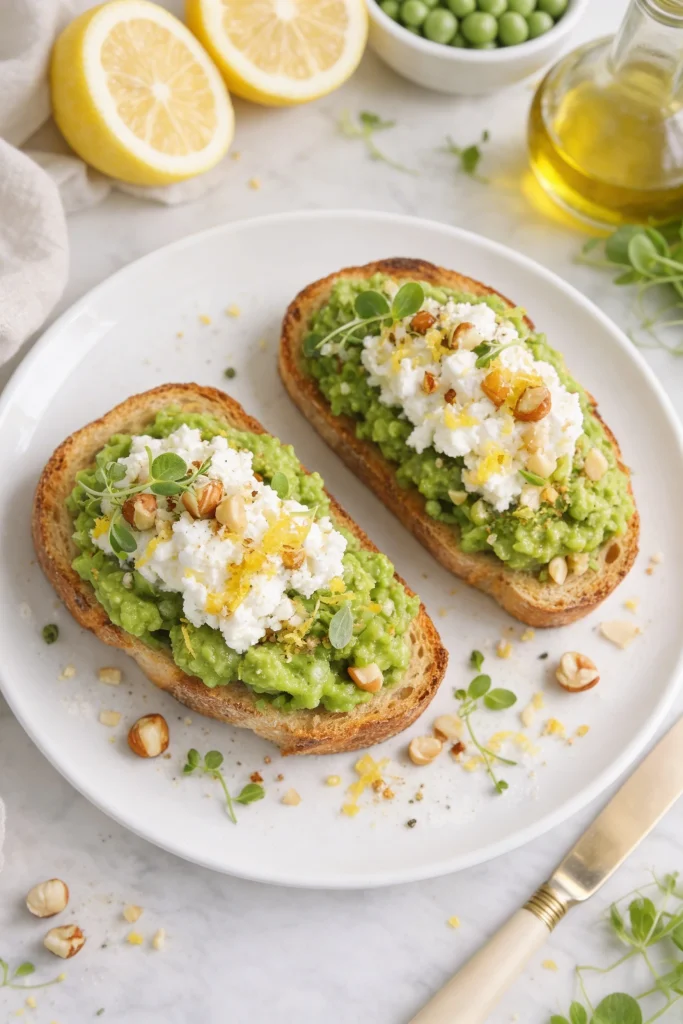
The texture of the pea mixture is worth paying attention to. A few pulses in the food processor gives you something spreadable with visible pea chunks, which is what you want. Run it too long and it becomes a smooth paste that tastes fine but loses the freshness and visual appeal that makes this dish stand out.
Make sure the peas are well-drained before blending. Frozen peas release water as they thaw, and if that liquid goes into the food processor, the mixture ends up too loose and wet. A quick press through a fine sieve or a few minutes in a colander does the job.
The garlic in this recipe goes in raw, which keeps the flavor sharp and bright. If you prefer a milder garlic note, roast the clove first or cut the amount in half.
Why Toasted Hazelnuts Make a Difference
Raw hazelnuts are fine but toasted ones are genuinely better here. The heat brings out a nuttier, slightly richer flavor that complements the creaminess of the ricotta and the brightness of the peas. It takes about four minutes in a dry pan and is worth not skipping.
After toasting, chop them finely enough that they scatter easily across the crostini without falling off the side when someone picks one up. A rough chop is too chunky and a very fine chop starts to feel like dust. Aim for small, uneven pieces.
If hazelnuts aren’t available, toasted pine nuts or roughly chopped toasted pistachios are both solid alternatives. Pistachios in particular look beautiful against the green pea topping.
Serving and Scaling for a Crowd
This recipe makes about 20 to 24 crostini, which works well as a starter for 6 to 8 people. If you’re hosting a larger group or want these as the main snack rather than a starter, simply double the pea mixture and get two baguettes. The pea mixture scales up easily.
The most practical approach for a party is to prep all the components separately, then assemble just before guests arrive or as people are coming in. That way the baguette stays crisp and nothing sits around getting soggy. Keep the ricotta, pea mixture, and hazelnuts in separate bowls and put them together at the last minute.
Leftovers don’t store well once assembled, but the pea mixture and the toasted hazelnuts both keep in the fridge for up to 3 days. Just re-toast a fresh baguette when you want more.
Notes
- Baguette alternatives: Any crusty bread works here. Sourdough sliced thinly, ciabatta, or even seeded crackers for a gluten-reduced option.
- Make-ahead: Toast the baguette and store it in an airtight container for up to a day. Make the pea mixture up to 3 days ahead and refrigerate. Toast the hazelnuts up to 3 days ahead and keep at room temperature. Assemble just before serving.
- Ricotta tip: Full-fat ricotta has a much creamier texture than low-fat. It’s worth it here since the ricotta is a main component, not a background ingredient.
- Lemon zest timing: Zest the lemon directly over the finished crostini rather than adding it to the pea mixture. This way the bright citrus oils land fresh on top rather than getting lost in the blend.
- Vegetarian and gluten notes: Already vegetarian as written. To make it gluten-free, swap the baguette for gluten-free bread or sturdy gluten-free crackers.
- Scaling: One batch of pea mixture comfortably covers 20 to 24 crostini. For a larger crowd, the mixture doubles well.
What You Need to Know
Can I make spring pea and ricotta crostini ahead of time?
The components can all be prepped a day or two in advance, but assemble them as close to serving as possible. Once the toppings go on the toasted bread, it starts to soften within 20 to 30 minutes. Keep everything separate and put it together right before you’re ready to serve.
Can I use fresh peas instead of frozen?
Yes, and they’re lovely when they’re in season. Blanch fresh peas in boiling salted water for 1 to 2 minutes, then transfer them immediately to an ice bath. Drain well and use the same way as the defrosted frozen peas. The flavor is slightly sweeter and more delicate.
What can I substitute for hazelnuts?
Toasted pine nuts are the closest substitute in terms of size and richness. Chopped toasted pistachios also work well and add a pop of green color. Walnuts are another option if that’s what you have, though their flavor is stronger and slightly more bitter.
Why are my crostini getting soggy?
Two likely causes: the peas weren’t drained well enough, leaving excess moisture in the mixture, or the crostini were assembled too far in advance. Make sure the peas are thoroughly drained before blending, and don’t top the bread more than 20 to 30 minutes before serving.
Can I use a different cheese instead of ricotta?
Whipped goat cheese is a great swap and pairs just as well with the peas. Cream cheese loosened with a little lemon juice also works if that’s what you have. Burrata torn on top instead of spread ricotta makes for a more indulgent version that’s worth trying.
Print
Spring Pea and Ricotta Crostini
- Total Time: 25 minutes
- Yield: 12 crostini (serves 4 as an appetizer) 1x
- Diet: Vegetarian
Ingredients
For the Crostini
- 1 baguette, sliced diagonally into 1/2-inch pieces (about 20 to 24 slices)
- 2 to 3 tablespoons extra virgin olive oil, for brushing
For the Pea Mixture
- 285g (10 oz / 2 cups) frozen peas, defrosted and drained of excess water
- 1 small garlic clove
- 1/2 cup grated Parmesan cheese
- 3 tablespoons extra virgin olive oil
- 1 teaspoon kosher salt
- 1/4 teaspoon freshly ground black pepper
- 1/4 teaspoon chili flakes or red pepper flakes
For Assembly
- 1/2 cup full-fat ricotta cheese
- 1/2 cup hazelnuts, toasted and finely chopped
- 1 lemon, zested
- Extra chili flakes, a drizzle of olive oil, or fresh mint leaves (optional, for finishing)
Instructions
- Preheat the oven to 400°F (200°C). Line a large baking sheet with parchment paper or leave it unlined.
- Slice and brush the baguette. Cut the baguette diagonally into 1/2-inch slices and arrange them in a single layer on the baking sheet. Brush the tops lightly with olive oil using a pastry brush or the back of a spoon.
- Toast the baguette slices. Bake for 8 to 10 minutes until the edges are golden and the tops are lightly crisp. Keep an eye on them after the 7-minute mark as oven temperatures vary. Remove from the oven and let them cool slightly on the pan. They’ll crisp up a bit more as they cool.
- Toast the hazelnuts (if not already done). Spread the hazelnuts in a single layer in a dry skillet over medium heat. Toast for 3 to 4 minutes, shaking the pan occasionally, until golden and fragrant. Transfer to a cutting board, let them cool for a minute, then chop finely. Set aside.
- Make the pea mixture. Add the defrosted, drained peas to a food processor along with the garlic clove, Parmesan, olive oil, salt, pepper, and chili flakes. Pulse 6 to 8 times until the mixture is roughly blended but still has some texture. You want it chunky and spreadable, not completely smooth. Taste and adjust seasoning.
- Prepare the ricotta. Spoon the ricotta into a small bowl and stir it briefly to loosen it up. Season with a small pinch of salt if needed.
- Assemble the crostini. Spread a thin layer of ricotta on each toasted baguette slice first. Then spoon a generous amount of the pea mixture on top, pressing it gently so it stays in place.
- Finish with toppings. Scatter the chopped toasted hazelnuts over each crostini, then zest the lemon directly over the assembled platter so the oils land on the toppings. Add a small pinch of extra chili flakes or a light drizzle of olive oil if you like.
- Serve immediately. These are best eaten within 20 to 30 minutes of assembly before the baguette softens from the toppings.
Notes
- Baguette alternatives: Any crusty bread works here. Sourdough sliced thinly, ciabatta, or even seeded crackers for a gluten-reduced option.
- Make-ahead: Toast the baguette and store it in an airtight container for up to a day. Make the pea mixture up to 3 days ahead and refrigerate. Toast the hazelnuts up to 3 days ahead and keep at room temperature. Assemble just before serving.
- Ricotta tip: Full-fat ricotta has a much creamier texture than low-fat. It’s worth it here since the ricotta is a main component, not a background ingredient.
- Lemon zest timing: Zest the lemon directly over the finished crostini rather than adding it to the pea mixture. This way the bright citrus oils land fresh on top rather than getting lost in the blend.
- Vegetarian and gluten notes: Already vegetarian as written. To make it gluten-free, swap the baguette for gluten-free bread or sturdy gluten-free crackers.
- Scaling: One batch of pea mixture comfortably covers 20 to 24 crostini. For a larger crowd, the mixture doubles well.
- Prep Time: 15 minutes
- Cook Time: 10 minutes T
- Category: Appetizer
- Method: Toasting
- Cuisine: Italian-inspired
Nutrition
- Serving Size: 3 crostini
- Calories: 210 kcal
- Sugar: 3 g
- Sodium: 320 mg
- Fat: 9 g
- Saturated Fat: 4 g
- Unsaturated Fat: 4.5 g
- Trans Fat: 0 g
- Carbohydrates: 24 g
- Fiber: 3 g
- Protein: 9 g
- Cholesterol: 20 mg