
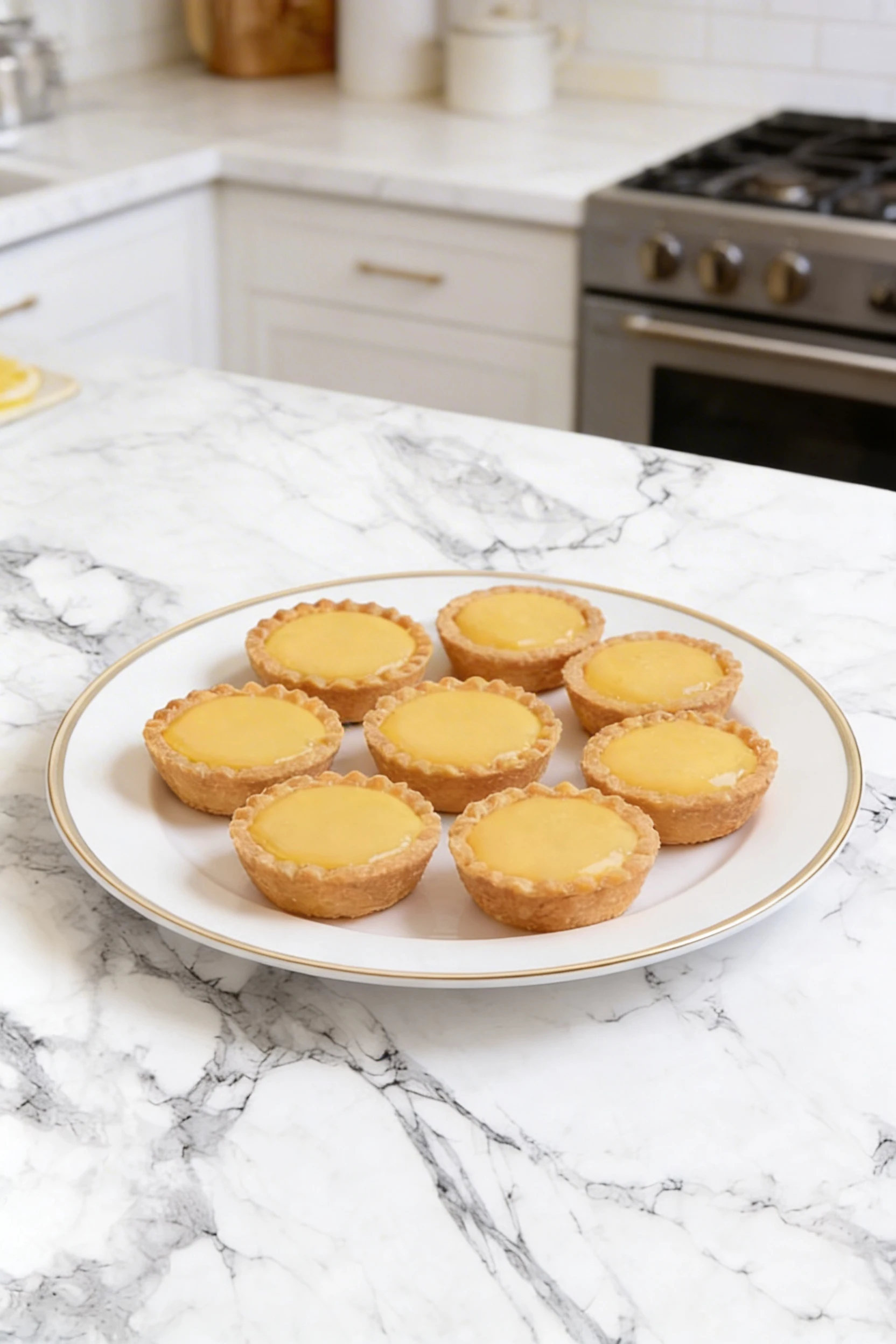
Lemon curd tartlets are one of those desserts that look like you spent all afternoon in the kitchen, but honestly, they come together faster than you’d think. I first made these on a rainy spring afternoon when I wanted something bright and a little fancy without committing to a full tart.
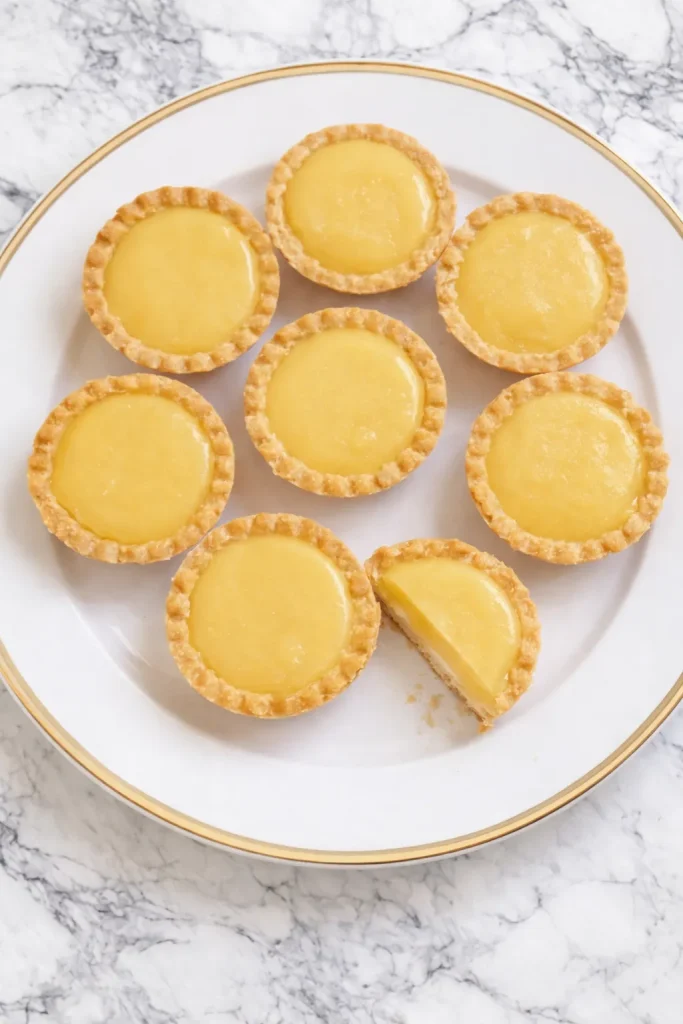
The combination of that buttery, crumbly shell with the silky, tart lemon curd on top is just so good. They’re small enough to eat in two bites and impressive enough to bring to a dinner party. Once you have the curd down, you’ll want to put it on everything.
Lemon Curd Tartlets Ingredients
For the Tartlet Shells
- 200 g all-purpose / plain flour
- 1 pinch fine salt
- 40 g icing sugar, sifted
- 100 g unsalted butter, cold and cut into small cubes
- 1 large egg, at room temperature
For the Lemon Curd
- 4 egg yolks
- 100 ml fresh lemon juice (about 3 large lemons)
- 100 g caster sugar, or fine white granulated sugar
- 60 g unsalted butter, at room temperature and cut into pieces
- Zest of 1 lemon (optional, but recommended)
How To Make this Lemon Curd Tartlets Step by Step
- Make the pastry dough. Combine the flour, sifted icing sugar, and salt in a large bowl. Add the cold butter cubes and rub the mixture together with your fingertips until it resembles coarse breadcrumbs. Don’t overwork it.
- Bring the dough together. Add the egg and mix just until the dough comes together into a smooth ball. Flatten it into a disc, wrap it in plastic wrap, and refrigerate for at least 30 minutes.
- Preheat your oven to 180°C (350°F). Lightly grease your tartlet tins or a mini tart pan.
- Roll and line the tins. On a lightly floured surface, roll the chilled dough to about 3mm thick. Cut out rounds slightly larger than your tartlet tins and press the dough in gently, making sure it fits snugly into the edges without tearing.
- Blind bake the shells. Prick the bases with a fork, line each with a small piece of parchment, and fill with baking beans or dried rice. Bake for 12 minutes, then remove the weights and parchment and bake for another 5 to 7 minutes until the shells are pale golden and cooked through. Let them cool completely on a wire rack.
- Start the lemon curd. In a heatproof bowl, whisk together the egg yolks, caster sugar, and lemon juice until combined. Add the lemon zest now if you’re using it.
- Cook the curd. Set the bowl over a pot of gently simmering water (don’t let the bowl touch the water). Stir constantly with a wooden spoon or silicone spatula for 8 to 10 minutes, until the curd thickens enough to coat the back of a spoon and holds a line when you drag your finger through it.
- Add the butter. Remove the bowl from the heat and stir in the room-temperature butter, piece by piece, until fully melted and incorporated. The curd should be glossy and smooth.
- Strain the curd. Pass it through a fine-mesh sieve into a clean bowl for an extra-smooth result. Press a sheet of plastic wrap directly onto the surface to prevent a skin forming, and let it cool to room temperature.
- Fill the tartlet shells. Once the curd and shells are both fully cooled, spoon or pipe the lemon curd into each shell, filling it just to the rim. Refrigerate for at least 30 minutes before serving to let the curd set properly.
Tips for the Best Shortcrust Pastry
Getting shortcrust pastry right is mostly about keeping things cold. The butter must be cold when it goes into the flour, and your hands should work quickly. The heat from your fingers is enough to melt the fat if you spend too long mixing, which leads to a tough shell instead of a crumbly one.
If the dough feels sticky after mixing, don’t add more flour. Wrap it up and give it time in the fridge. Chilling relaxes the gluten and firms up the butter, which makes the dough much easier to roll out and handle.
One more thing: don’t skip blind baking. Lemon curd is not baked once it’s in the shell, so if you skip this step, you’ll end up with raw, soggy pastry at the bottom. The extra 20 minutes is worth it every single time.
Getting the Lemon Curd Right
The most common mistake with lemon curd is rushing the cooking. High heat will scramble the egg yolks and leave you with something grainy. Low and slow over a double boiler is the way to go. Patience really does make the difference here.
You’ll know the curd is ready when it leaves a clean line when you run your finger across the back of a coated spoon. It will also look noticeably thicker and slightly darker in color. Keep in mind it firms up more as it cools, so don’t wait until it looks solid in the pot.
The lemon zest is listed as optional, but I’d strongly recommend including it. It adds an extra punch of real citrus flavor that just makes the whole thing pop. If you love bright, zingy lemon flavor, it’s a must. You might also enjoy this lemon poppy seed pound cake for another great use of fresh lemon.
How to Serve and Store Lemon Curd Tartlets
These tartlets are best served slightly chilled or at room temperature. If they’ve been in the fridge for a while, let them sit out for 10 minutes before serving so the butter in the curd softens back up a little.
For a finishing touch, add a small dollop of lightly whipped cream, a thin slice of candied lemon, or a few fresh berries. Simple toppings work best since the lemon curd filling is already quite bold in flavor.
Store filled tartlets in an airtight container in the refrigerator for up to 3 days. The pastry will soften slightly over time, so if you want to make them ahead, store the shells and the curd separately and fill them the day you plan to serve.
Notes
- Cold butter is non-negotiable for the pastry. Cut it into small cubes and keep it in the fridge until the last second.
- Don’t over-fill the shells. Lemon curd is rich, and these are small. A generous spoonful per tartlet is just right.
- Make-ahead tip: The lemon curd keeps in the fridge for up to 2 weeks in a sealed jar. The baked shells can be stored at room temperature in an airtight container for up to 3 days.
- Scaling: This recipe makes approximately 12 small tartlets depending on the size of your tins. Double the curd if you want extra to use on toast or scones.
- Equipment: Mini tartlet tins around 8 to 10 cm work best. A removable-bottom tart pan also works well and makes unmolding easier.
- Egg whites: You’ll have 4 leftover egg whites from the curd. Store them in the fridge for up to 4 days and use them for meringues or pavlova.
Frequently Asked Questions
Can I make the tartlet shells ahead of time?
Yes, the baked shells keep really well. Store them in an airtight container at room temperature for up to 3 days. Don’t fill them until the day you’re serving, or the pastry will go soft from the moisture in the curd.
Why did my lemon curd turn out lumpy or grainy?
This usually means the heat was too high and the eggs scrambled slightly. Always cook the curd over a double boiler on a gentle simmer, and stir constantly. If it does turn grainy, try blending it quickly with an immersion blender and straining it through a fine-mesh sieve. It can often be rescued.
Can I freeze lemon curd tartlets?
The curd itself doesn’t freeze well since it can separate and become watery when thawed. The unfilled pastry shells freeze fine for up to a month. Freeze them in a single layer and then transfer to a sealed bag. Thaw at room temperature before filling.
What can I substitute for caster sugar in the lemon curd?
Fine white granulated sugar works just as well. Avoid coarse sugar since it takes longer to dissolve and can leave the curd slightly gritty. Some people use honey, but it does change the flavor quite noticeably.
How do I know when the tartlet shells are done baking?
After you remove the blind baking weights, the shells should go back in the oven until the base looks dry and feels firm to the touch. The edges should be just lightly golden. Pale is fine since they won’t go back in after being filled.
Print
Lemon Curd Tartlets
- Total Time: 45 minutes
- Yield: 12 tartlets 1x
- Diet: Vegetarian
Ingredients
For the Tartlet Shells
- 200 g all-purpose / plain flour
- 1 pinch fine salt
- 40 g icing sugar, sifted
- 100 g unsalted butter, cold and cut into small cubes
- 1 large egg, at room temperature
For the Lemon Curd
- 4 egg yolks
- 100 ml fresh lemon juice (about 3 large lemons)
- 100 g caster sugar, or fine white granulated sugar
- 60 g unsalted butter, at room temperature and cut into pieces
- Zest of 1 lemon (optional, but recommended)
Instructions
- Make the pastry dough. Combine the flour, sifted icing sugar, and salt in a large bowl. Add the cold butter cubes and rub the mixture together with your fingertips until it resembles coarse breadcrumbs. Don’t overwork it.
- Bring the dough together. Add the egg and mix just until the dough comes together into a smooth ball. Flatten it into a disc, wrap it in plastic wrap, and refrigerate for at least 30 minutes.
- Preheat your oven to 180°C (350°F). Lightly grease your tartlet tins or a mini tart pan.
- Roll and line the tins. On a lightly floured surface, roll the chilled dough to about 3mm thick. Cut out rounds slightly larger than your tartlet tins and press the dough in gently, making sure it fits snugly into the edges without tearing.
- Blind bake the shells. Prick the bases with a fork, line each with a small piece of parchment, and fill with baking beans or dried rice. Bake for 12 minutes, then remove the weights and parchment and bake for another 5 to 7 minutes until the shells are pale golden and cooked through. Let them cool completely on a wire rack.
- Start the lemon curd. In a heatproof bowl, whisk together the egg yolks, caster sugar, and lemon juice until combined. Add the lemon zest now if you’re using it.
- Cook the curd. Set the bowl over a pot of gently simmering water (don’t let the bowl touch the water). Stir constantly with a wooden spoon or silicone spatula for 8 to 10 minutes, until the curd thickens enough to coat the back of a spoon and holds a line when you drag your finger through it.
- Add the butter. Remove the bowl from the heat and stir in the room-temperature butter, piece by piece, until fully melted and incorporated. The curd should be glossy and smooth.
- Strain the curd. Pass it through a fine-mesh sieve into a clean bowl for an extra-smooth result. Press a sheet of plastic wrap directly onto the surface to prevent a skin forming, and let it cool to room temperature.
- Fill the tartlet shells. Once the curd and shells are both fully cooled, spoon or pipe the lemon curd into each shell, filling it just to the rim. Refrigerate for at least 30 minutes before serving to let the curd set properly.
Notes
- Cold butter is non-negotiable for the pastry. Cut it into small cubes and keep it in the fridge until the last second.
- Don’t over-fill the shells. Lemon curd is rich, and these are small. A generous spoonful per tartlet is just right.
- Make-ahead tip: The lemon curd keeps in the fridge for up to 2 weeks in a sealed jar. The baked shells can be stored at room temperature in an airtight container for up to 3 days.
- Scaling: This recipe makes approximately 12 small tartlets depending on the size of your tins. Double the curd if you want extra to use on toast or scones.
- Equipment: Mini tartlet tins around 8 to 10 cm work best. A removable-bottom tart pan also works well and makes unmolding easier.
- Egg whites: You’ll have 4 leftover egg whites from the curd. Store them in the fridge for up to 4 days and use them for meringues or pavlova.
- Prep Time: 25 minutes
- Cook Time: 20 minutes
- Category: Dessert
- Method: Baking
- Cuisine: French-inspired
Nutrition
- Serving Size: 1 tartlet
- Calories: 180 kcal
- Sugar: 14 g
- Sodium: 55 mg
- Fat: 10 g
- Saturated Fat: 6 g
- Unsaturated Fat: 3 g
- Trans Fat: 0 g
- Carbohydrates: 21 g
- Fiber: 1 g
- Protein: 2 g
- Cholesterol: 65 mg