
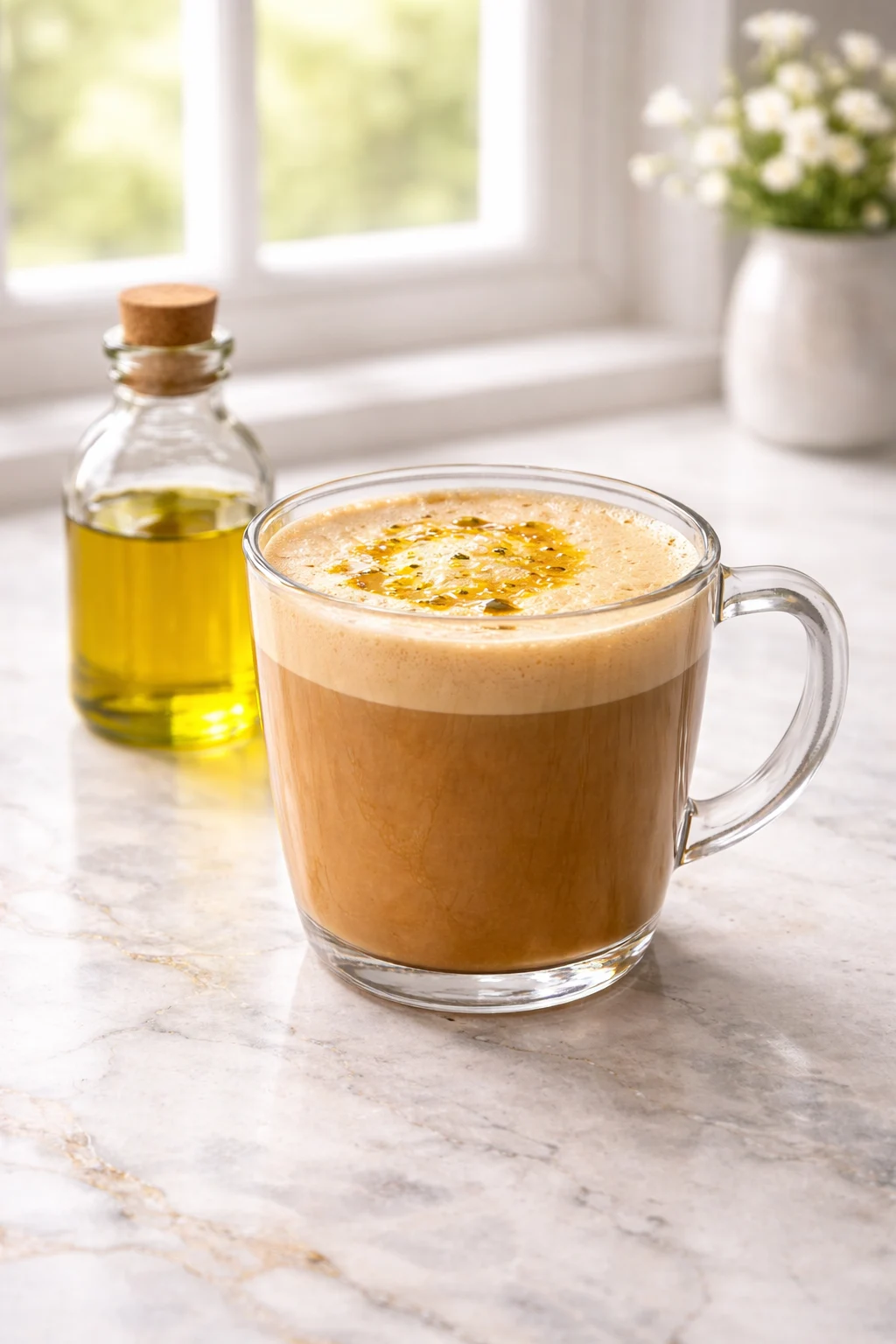
Olive oil coffee has been my go-to morning drink for the past few months, and honestly I wasn’t sure about it at first. Pouring oil into espresso sounds strange, but one sip and it just clicks. The olive oil softens the bitterness of the espresso and gives it this rich, almost buttery body that I genuinely look forward to. It’s smooth, satisfying, and takes about two minutes to put together.
I started making this on slow weekend mornings when I wanted something a bit more indulgent than a plain shot. Now I make it most days. The oat milk keeps it light and creamy without overpowering the espresso, and cold-pressed extra virgin olive oil brings a flavor that regular coffee add-ins just don’t replicate.
Ingredients
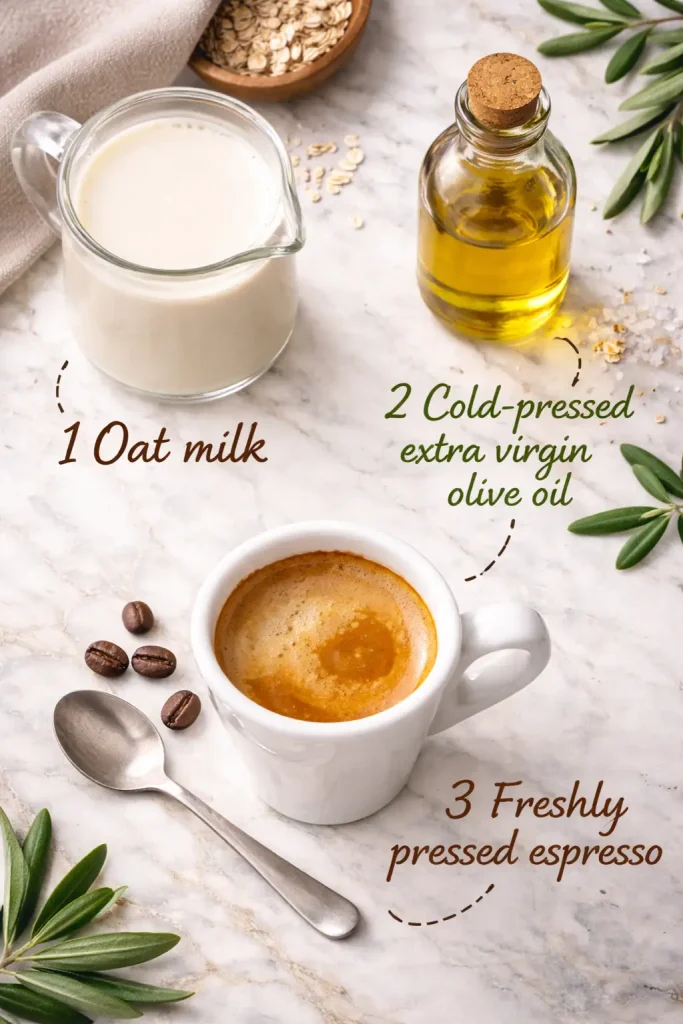
- 2 shots espresso, freshly brewed
- 1 tablespoon cold-pressed extra virgin olive oil
- 1/3 cup (80 ml) oat milk or unsweetened cashew milk, steamed or warmed
How To Make Olive Oil Coffee
- Brew 2 shots of fresh espresso directly into your serving mug and set aside.
- Warm the oat milk in a small saucepan over medium-low heat until steaming, about 2 to 3 minutes. Don’t let it boil.
- Froth the warmed oat milk using a handheld frother or by shaking vigorously in a jar with the lid on, until foamy and doubled in volume, about 30 seconds.
- Add 1 tablespoon of cold-pressed extra virgin olive oil directly to the hot espresso and stir gently for about 15 seconds until the oil starts to integrate.
- Pour the frothed oat milk slowly over the espresso and olive oil, holding back the foam with a spoon, then spoon the foam on top.
- Serve immediately while hot.
Does Olive Oil Actually Work in Coffee?
It sounds odd, and I get it. But olive oil has been used in North African and Middle Eastern coffee traditions for a long time. The fat in the oil binds with the bitter compounds in espresso and mellows them out, which is why the final drink tastes smoother than a regular latte. Cold-pressed extra virgin olive oil works best here because it still has flavor. A refined or light olive oil won’t give you the same result.
The key is using a good-quality oil. Fruity, grassy, or buttery varieties all work slightly differently. I prefer something mild and buttery-tasting so it doesn’t compete with the espresso, but if you enjoy bold olive oil, that works too.
Choosing the Right Milk
Oat milk is my top pick for olive oil coffee because it’s naturally creamy and has a mild sweetness that balances the olive oil. It froths well too, even at home with a basic frother. Unsweetened cashew milk is a close second. It’s thinner but has a neutral, slightly nutty flavor that doesn’t distract from the espresso.
I’d avoid anything too thin like rice milk or too sweet like vanilla almond milk. You want the milk to support the drink without overpowering the espresso-olive oil combination. Full-fat oat milk gives you the best texture overall.
Tips for Getting the Ratio Right
The one tablespoon of olive oil is the sweet spot for a double shot. More than that and the drink starts to feel heavy. Less and you lose the silkiness that makes this worth making. I’d stick with the recipe as written your first few times, then adjust from there based on your taste.
Temperature matters a lot here. The espresso needs to be hot when you add the oil so they can combine properly. Cold espresso and olive oil don’t emulsify as well and you end up with an oily film on top rather than a smooth drink. Brew fresh and move fast.
Make It Your Own
Once you’ve got the base down, there’s room to play. A pinch of cinnamon stirred in with the olive oil adds warmth without changing the character too much. A tiny drizzle of honey on top works beautifully if you want a hint of sweetness. Some people add a small pinch of sea salt, which actually brings out the olive oil flavor in an interesting way.
You can also try it iced. Brew the espresso, let it cool for a minute, shake it with the olive oil and cold oat milk over ice. It’s different from the hot version but still really good. The olive oil behaves differently cold, so give it an extra shake to get a better mix.
Notes
- Use freshly brewed espresso for the best flavor. Pre-made or pod espresso works but fresh is noticeably better.
- Cold-pressed extra virgin olive oil is non-negotiable. Light or pure olive oil won’t have the same taste or effect.
- Stir the espresso and olive oil together for at least 15 seconds before adding milk. This helps them combine properly.
- This drink is best made to order. It doesn’t store well once mixed.
- A handheld milk frother costs under $10 and makes a real difference in texture. Worth it.
- If your oat milk separates when you heat it, switch brands. Some oat milks are more stable than others.
Recipe FAQs
Can I use a regular drip coffee instead of espresso?
You can, but the drink won’t taste the same. Espresso has the concentration and body to stand up to olive oil. Drip coffee is too thin and the flavors won’t balance well. If you don’t have an espresso machine, a moka pot on the stove works great.
Why does my olive oil float instead of mixing in?
The espresso is probably not hot enough, or you didn’t stir long enough. The oil needs heat to partially emulsify with the coffee. Brew fresh, stir well for at least 15 seconds, and add the milk while everything is still hot.
How long does this keep?
It doesn’t. Make it fresh and drink it right away. Oil-based coffee drinks separate quickly and don’t reheat well. The whole recipe takes under five minutes, so there’s no reason to make it ahead.
Can I make this dairy-free?
It already is, as long as you use oat milk or cashew milk. Both options are naturally dairy-free. Coconut milk works too but it adds a strong coconut flavor that competes with the olive oil.
Is olive oil coffee actually healthy?
The olive oil adds healthy fats and antioxidants, and using unsweetened plant milk keeps the sugar low. It’s a much better fat source than cream or flavored syrups. That said, it’s still coffee with added fat, so it’s worth being mindful of portion if you’re watching calories.
Print
Olive Oil Coffee
- Total Time: 10 minutes
- Yield: 1 serving 1x
- Diet: Gluten Free
Ingredients
- 2 shots espresso, freshly brewed
- 1 tablespoon cold-pressed extra virgin olive oil
- 1/3 cup (80 ml) oat milk or unsweetened cashew milk, steamed or warmed
Instructions
- Brew 2 shots of fresh espresso directly into your serving mug and set aside.
- Warm the oat milk in a small saucepan over medium-low heat until steaming, about 2 to 3 minutes. Don’t let it boil.
- Froth the warmed oat milk using a handheld frother or by shaking vigorously in a jar with the lid on, until foamy and doubled in volume, about 30 seconds.
- Add 1 tablespoon of cold-pressed extra virgin olive oil directly to the hot espresso and stir gently for about 15 seconds until the oil starts to integrate.
- Pour the frothed oat milk slowly over the espresso and olive oil, holding back the foam with a spoon, then spoon the foam on top.
- Serve immediately while hot.
Notes
- Use freshly brewed espresso for the best flavor. Pre-made or pod espresso works but fresh is noticeably better.
- Cold-pressed extra virgin olive oil is non-negotiable. Light or pure olive oil won’t have the same taste or effect.
- Stir the espresso and olive oil together for at least 15 seconds before adding milk. This helps them combine properly.
- This drink is best made to order. It doesn’t store well once mixed.
- A handheld milk frother costs under $10 and makes a real difference in texture. Worth it.
- If your oat milk separates when you heat it, switch brands. Some oat milks are more stable than others.
- Prep Time: 5 minutes
- Cook Time: 5 minutes
- Category: Beverage
- Method: Blended
- Cuisine: International
Nutrition
- Serving Size: 1 cup (240 ml)
- Calories: 120 kcal
- Sugar: 1 g
- Sodium: 5 mg
- Fat: 14 g
- Saturated Fat: 2 g
- Unsaturated Fat: 12 g
- Trans Fat: 0 g
- Carbohydrates: 2 g
- Fiber: 0 g
- Protein: 1 g
- Cholesterol: 0 mg