
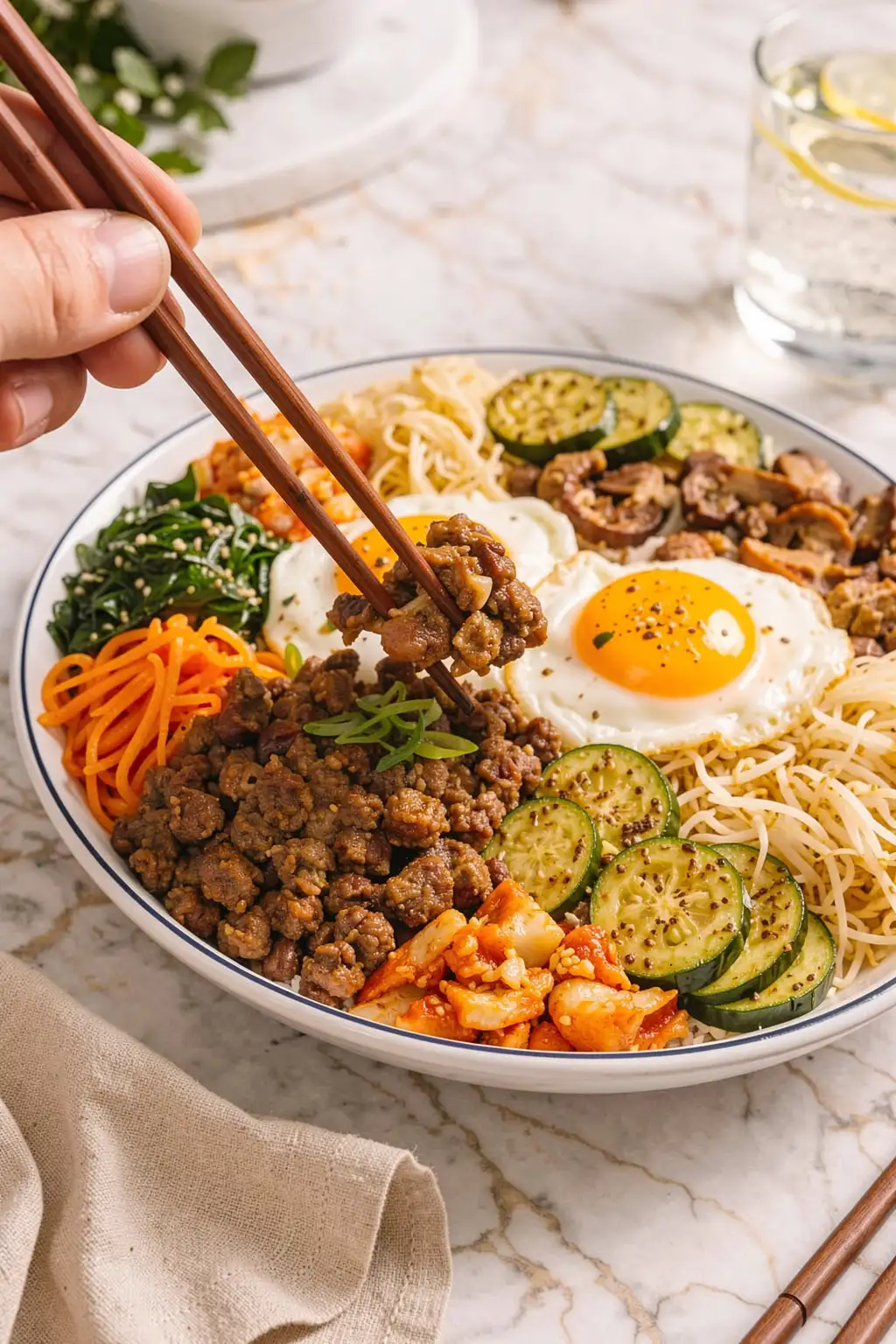
The best bibimbap recipe I’ve ever made at home came together on a slow Sunday when I had a fridge full of random vegetables and zero plans. I honestly didn’t expect it to taste this close to the real thing, but here we are.
This Korean rice bowl checks every box: warm white rice as the base, colorful sautéed vegetables, a perfectly fried egg on top, and that spicy-sweet gochujang sauce that ties it all together.
What Is Bibimbap
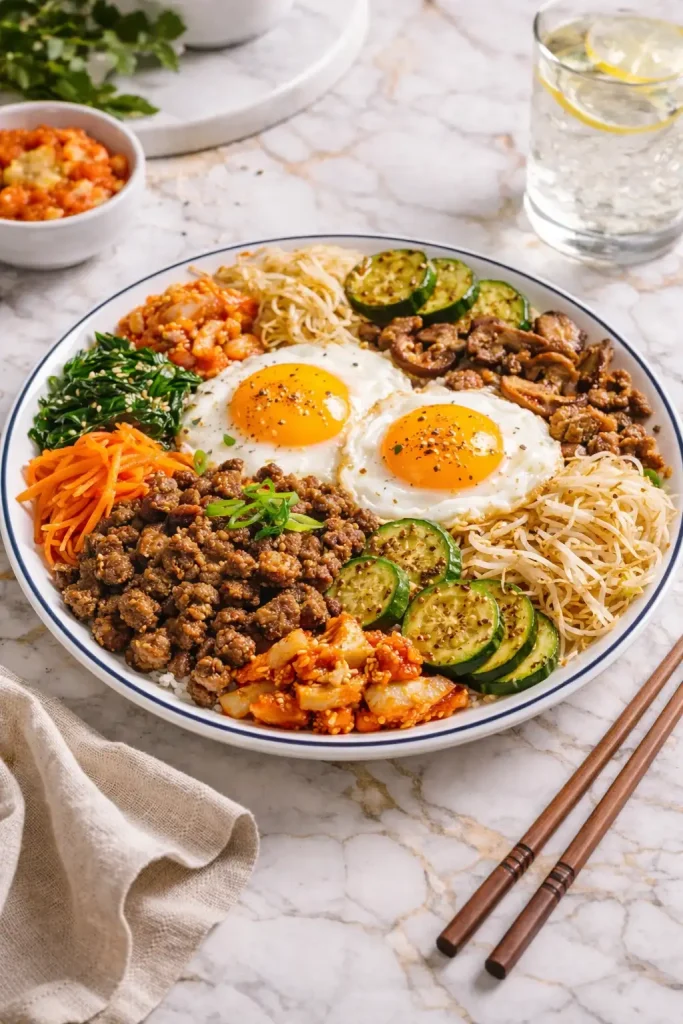
Bibimbap is a beloved Korean dish whose name literally means “mixed rice.” Yes, white rice is the base for bibimbap, not sticky corn or any other grain. It’s typically served in a bowl with individually seasoned and cooked vegetables arranged in sections over the rice, topped with a fried egg and a drizzle of gochujang.
The sauce traditionally used when making bibimbap is gochujang, a Korean fermented red chili paste with a uniquely deep, spicy, slightly sweet flavor. As for what ingredient is commonly placed on top of bibimbap, that would be a fried egg, usually sunny-side up so the yolk breaks and coats everything when you mix it in.
Everything gets stirred together at the table before eating, which is honestly the best part.
Ingredients You Need
For the vegetables:
- 5 ounces shiitake mushrooms, sliced
- 1 large zucchini, halved and thinly sliced
- 1 small carrot, cut into matchsticks
- 6 ounces baby spinach
- 1 ½ cups mung bean sprouts
- 2 tablespoons avocado oil
- 1 ½ tablespoons toasted sesame oil
- Kosher salt and freshly ground black pepper, to taste
For serving:
- Cooked white rice
- Korean bulgogi or Korean ground beef
- Kimchi
- Fried eggs
- Gochujang
- Toasted sesame oil
- Toasted sesame seeds
How To Make Your Bibimbap Recipe
- Cook the rice. Prepare your white rice according to package instructions. For the best texture, use short-grain or medium-grain rice. Keep it warm while you work on the toppings.
- Season the spinach. Bring a small pot of salted water to a boil. Blanch the baby spinach for about 30 seconds until just wilted, then transfer immediately to an ice bath. Squeeze out the excess water, then toss with a small drizzle of toasted sesame oil and a pinch of salt. Set aside.
- Sauté the mushrooms. Heat 1 tablespoon of avocado oil in a skillet over medium-high heat. Add the sliced shiitake mushrooms and cook for 4 to 5 minutes, stirring occasionally, until golden and tender. Season with salt and pepper. Transfer to a plate.
- Cook the carrots. In the same skillet, add a little more avocado oil and toss in the carrot matchsticks. Stir-fry for 2 to 3 minutes until just softened but still with a bit of bite. Season lightly with salt and set aside.
- Sauté the zucchini. Add the remaining avocado oil to the pan. Add the zucchini slices in a single layer and cook for about 3 minutes per side over medium-high heat until lightly golden. Season with salt and pepper, then set aside.
- Blanch the bean sprouts. Quickly blanch the mung bean sprouts in boiling water for 1 minute, then drain and toss with a tiny bit of sesame oil and salt. Set aside.
- Fry the eggs. In a nonstick pan over medium heat, fry your eggs sunny-side up. You want the whites fully set but the yolk still runny, about 3 to 4 minutes. Season lightly with salt.
- Assemble the bowl. Add a generous scoop of warm white rice to each bowl. Arrange the mushrooms, spinach, carrots, zucchini, and bean sprouts in separate sections around the bowl. Add a portion of bulgogi or Korean ground beef, a spoonful of kimchi, and top the whole thing with a fried egg right in the center.
- Finish and serve. Drizzle with gochujang and a little toasted sesame oil, then scatter sesame seeds over the top. Serve immediately and mix everything together at the table before eating.
Recipe Variations
One of the things I love most about bibimbap is how flexible it is. The vegetables listed here are the most traditional, but you can honestly swap in whatever you have. Thinly sliced zucchini can be replaced with bell pepper strips, bean sprouts swapped for edamame, or mushrooms traded for thinly sliced eggplant. The key is to season each component separately before adding it to the bowl.
If you want a vegetarian version, skip the bulgogi and just double up on the vegetables or add some pan-fried tofu. A splash of soy sauce and a little gochujang mixed together makes a simple sauce that works beautifully with plant-based toppings. You might also enjoy this Korean Gochujang Cauliflower as a swap-in for meat.
For a lower-carb take, cauliflower rice works surprisingly well as the base instead of white rice. It won’t give you the same chewy texture, but it soaks up the gochujang sauce just as nicely. Check out this Low Carb Cauliflower Fried Rice for technique inspiration if you go that route.
How to Serve Bibimbap
Bibimbap is best served immediately after assembling, while the rice is still warm and the egg yolk is still runny. The whole point is to mix everything together right at the table, so don’t be shy about stirring it all up before you eat. The gochujang, sesame oil, and yolk create a rich, spicy coating over the rice and vegetables that’s really the heart of the dish.
For a proper Korean meal experience, serve your bibimbap alongside a bowl of miso soup or a simple broth, plus a few small banchan (side dishes) like additional kimchi or pickled cucumbers. It’s also totally acceptable to eat this solo, standing at the counter on a weeknight, and I say that from personal experience.
If you’re making bibimbap for guests, set up a DIY station where people can build their own bowls. Lay out the cooked rice and all the toppings separately and let everyone customize their spice level with the gochujang. It’s a fun, interactive way to eat and everyone ends up happy. You can also serve this alongside dishes like this Garlic Butter Chicken and Rice for a bigger spread.
Make the Gochujang Sauce
The sauce traditionally used when making bibimbap is gochujang on its own, but you can also make a slightly more complex version at home by mixing it with a few extra ingredients. Combine 2 tablespoons of gochujang with 1 tablespoon of toasted sesame oil, 1 teaspoon of honey or rice syrup, 1 teaspoon of soy sauce, and 1 teaspoon of rice vinegar. Whisk until smooth. This version has a little more depth and a touch of sweetness that balances the heat nicely.
You can make this sauce up to a week ahead and keep it in a sealed jar in the fridge. It’s also fantastic as a dipping sauce for dumplings, drizzled over grain bowls, or used as a marinade. If you love cooking with gochujang, our Creamy Gochujang Sauce is worth bookmarking too.
Helpful Tips
- Season each vegetable separately. This is the biggest difference between a flat-tasting bowl and one that actually sings. Every component gets its own salt, pepper, or sesame oil treatment before going into the bowl.
- Use day-old rice if you can. Freshly cooked rice can be a little too wet and clumpy. Rice that’s been in the fridge overnight has a firmer, drier texture that holds up better in the bowl.
- Don’t skip the sesame oil. It might seem like a small detail, but toasted sesame oil is what gives bibimbap that unmistakable Korean flavor. A few drops go a long way.
- Make-ahead tip. You can prep all the vegetables up to 2 days ahead and store them separately in the fridge. Assemble the bowls right before serving.
- Scaling up. This recipe scales easily for a crowd. Just multiply the vegetable quantities and keep each one in a separate container until you’re ready to build the bowls.
- Egg alternatives. If you’d rather not have a runny yolk, a soft-boiled egg or even a scrambled egg works fine here.
Frequently Asked Questions
Can I make bibimbap ahead of time?
You can absolutely prep the components in advance. Cook and season each vegetable separately, then store them in individual containers in the fridge for up to 2 days. The rice can also be made ahead. Just fry the eggs fresh right before serving, since a cold or overcooked yolk really does change the whole experience.
What can I substitute for gochujang?
Gochujang is pretty unique, but if you don’t have it, a mix of sriracha and a tiny bit of miso paste gets you close. It won’t have the same fermented depth, but it’ll still taste good. For a milder version, mix sriracha with a little honey and soy sauce.
How do I store leftovers?
Store each component separately in airtight containers in the fridge for up to 3 days. Reassemble when you’re ready to eat and top with a freshly fried egg. The bibimbap sauce keeps well in a small sealed jar for up to a week.
Can I freeze bibimbap?
The cooked vegetables and rice freeze reasonably well, but the texture of the veggies does soften after thawing. The fried egg doesn’t freeze well at all. If you want to meal prep, freezing the rice and cooked protein separately works better than freezing the full assembled bowl.
Is white rice the base for bibimbap?
Yes, short-grain or medium-grain white rice is the traditional and correct base for bibimbap. It has a slightly sticky texture that holds together well in the bowl and absorbs the sauce beautifully when mixed.
Print
Best Bibimbap Recipe
- Total Time: 45 minutes
- Yield: 4 servings 1x
- Diet: Vegetarian
Ingredients
For the vegetables:
- 5 ounces shiitake mushrooms, sliced
- 1 large zucchini, halved and thinly sliced
- 1 small carrot, cut into matchsticks
- 6 ounces baby spinach
- 1 ½ cups mung bean sprouts
- 2 tablespoons avocado oil
- 1 ½ tablespoons toasted sesame oil
- Kosher salt and freshly ground black pepper, to taste
For serving:
- Cooked white rice
- Korean bulgogi or Korean ground beef
- Kimchi
- Fried eggs
- Gochujang
- Toasted sesame oil
- Toasted sesame seeds
Instructions
- Cook the rice. Prepare your white rice according to package instructions. For the best texture, use short-grain or medium-grain rice. Keep it warm while you work on the toppings.
- Season the spinach. Bring a small pot of salted water to a boil. Blanch the baby spinach for about 30 seconds until just wilted, then transfer immediately to an ice bath. Squeeze out the excess water, then toss with a small drizzle of toasted sesame oil and a pinch of salt. Set aside.
- Sauté the mushrooms. Heat 1 tablespoon of avocado oil in a skillet over medium-high heat. Add the sliced shiitake mushrooms and cook for 4 to 5 minutes, stirring occasionally, until golden and tender. Season with salt and pepper. Transfer to a plate.
- Cook the carrots. In the same skillet, add a little more avocado oil and toss in the carrot matchsticks. Stir-fry for 2 to 3 minutes until just softened but still with a bit of bite. Season lightly with salt and set aside.
- Sauté the zucchini. Add the remaining avocado oil to the pan. Add the zucchini slices in a single layer and cook for about 3 minutes per side over medium-high heat until lightly golden. Season with salt and pepper, then set aside.
- Blanch the bean sprouts. Quickly blanch the mung bean sprouts in boiling water for 1 minute, then drain and toss with a tiny bit of sesame oil and salt. Set aside.
- Fry the eggs. In a nonstick pan over medium heat, fry your eggs sunny-side up. You want the whites fully set but the yolk still runny, about 3 to 4 minutes. Season lightly with salt.
- Assemble the bowl. Add a generous scoop of warm white rice to each bowl. Arrange the mushrooms, spinach, carrots, zucchini, and bean sprouts in separate sections around the bowl. Add a portion of bulgogi or Korean ground beef, a spoonful of kimchi, and top the whole thing with a fried egg right in the center.
- Finish and serve. Drizzle with gochujang and a little toasted sesame oil, then scatter sesame seeds over the top. Serve immediately and mix everything together at the table before eating.
Notes
- Season each vegetable separately. This is the biggest difference between a flat-tasting bowl and one that actually sings. Every component gets its own salt, pepper, or sesame oil treatment before going into the bowl.
- Use day-old rice if you can. Freshly cooked rice can be a little too wet and clumpy. Rice that’s been in the fridge overnight has a firmer, drier texture that holds up better in the bowl.
- Don’t skip the sesame oil. It might seem like a small detail, but toasted sesame oil is what gives bibimbap that unmistakable Korean flavor. A few drops go a long way.
- Make-ahead tip. You can prep all the vegetables up to 2 days ahead and store them separately in the fridge. Assemble the bowls right before serving.
- Scaling up. This recipe scales easily for a crowd. Just multiply the vegetable quantities and keep each one in a separate container until you’re ready to build the bowls.
- Egg alternatives. If you’d rather not have a runny yolk, a soft-boiled egg or even a scrambled egg works fine here.
- Prep Time: 25 minutes
- Cook Time: 20 minutes
- Category: Main Course
- Method: Stovetop
- Cuisine: Korean
Nutrition
- Serving Size: 1 bowl
- Calories: 450 kcal
- Sugar: 6 g
- Sodium: 700 mg
- Fat: 3 g
- Saturated Fat: 10 g
- Unsaturated Fat: 10 g
- Trans Fat: 0 g
- Carbohydrates: 65 g
- Fiber: 5 g
- Protein: 16 g
- Cholesterol: 55 mg