
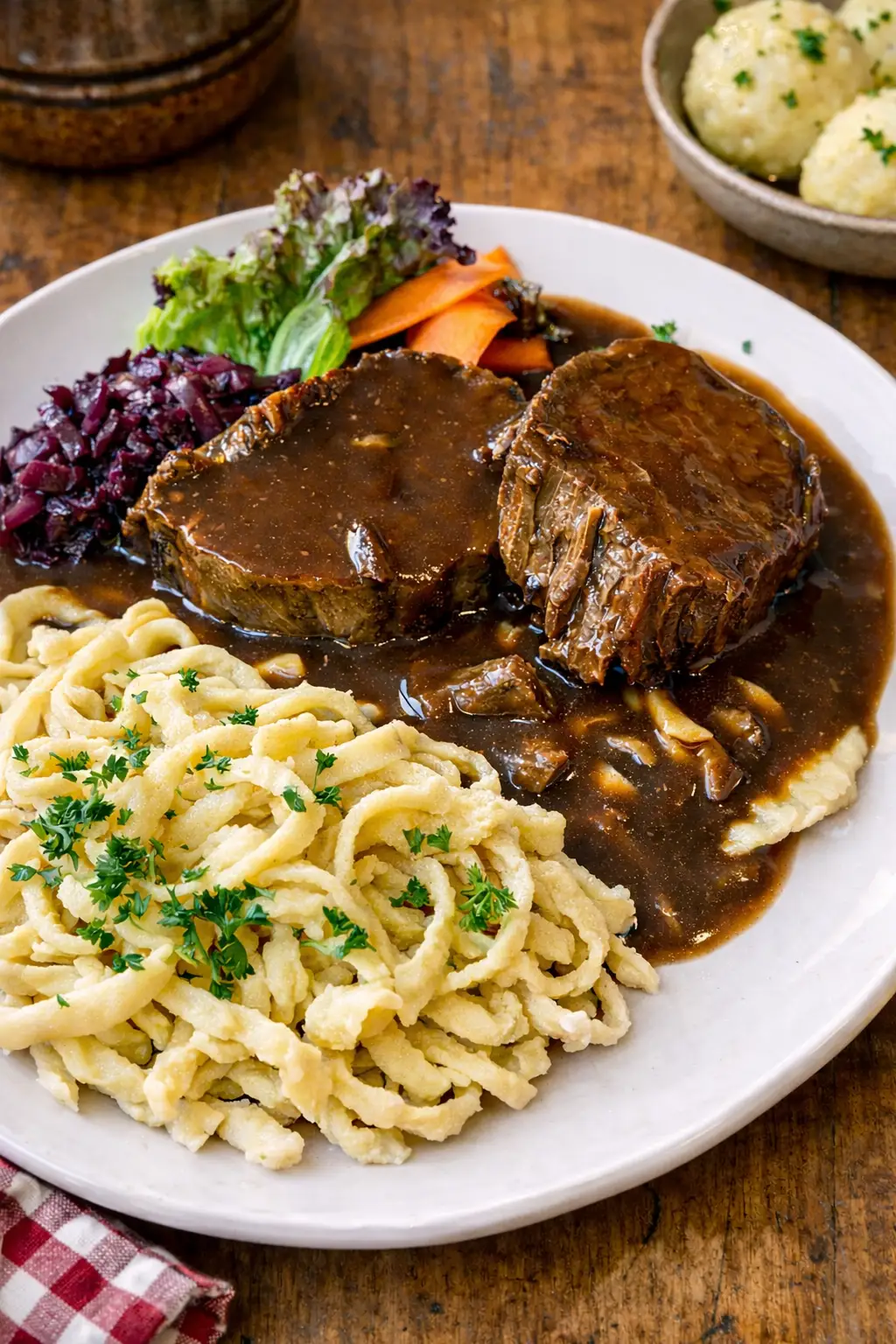
Authentic German Sauerbraten is a pot roast that’s been marinated for days in a tangy wine-vinegar mixture, creating tender, flavorful meat with a sweet-sour gravy that’s pure comfort food. This traditional German dish takes patience, the meat needs at least three days to soak up all those spices and aromatics, but the hands-on work is actually pretty simple. The result is meat so tender it practically falls apart, served with a rich gravy thickened with gingersnaps (yes, really) that adds an unexpected sweetness. It’s the kind of meal that fills your house with amazing smells and makes Sunday dinner feel special.
Ingredients
For the Marinade:
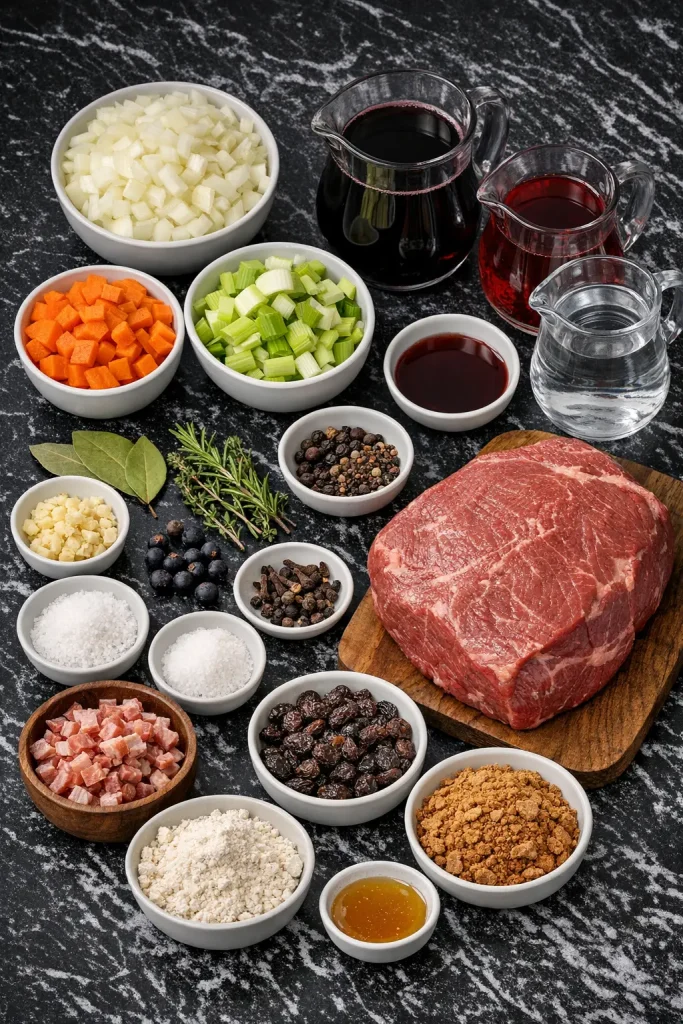
- 2 large yellow onions, chopped
- 2 large carrots, diced
- 1 large leek, chopped, thoroughly washed and drained
- 3 cloves garlic, minced
- 2 large sprigs fresh thyme, or 1 teaspoon dried
- 2 small sprigs fresh rosemary, or 1 teaspoon dried
- 2 bay leaves
- 8 juniper berries, cracked
- 6 whole cloves
- 10 whole black peppercorns, cracked
- 2 1/2 teaspoons salt
- 1 teaspoon sugar
- 2 1/2 cups dry red wine (cabernet sauvignon, merlot, or pinot noir)
- 1 cup red wine vinegar
- 1 1/2 cups water
For the Roast:
- 4 pounds beef roast (bottom round, rump roast, or chuck roast)
- 4 slices bacon, finely diced (optional)
- 4 tablespoons all-purpose flour
- 1/4 cup raisins
- 3 ounces gingersnap cookies, crumbled
- 1 tablespoon honey
How To Make Authentic German Sauerbraten
- Combine the onions, carrots, leek, garlic, thyme, rosemary, bay leaves, juniper berries, cloves, peppercorns, salt, and sugar in a large pot with the red wine, vinegar, and water, then bring to a boil and simmer for 5 minutes before cooling completely.
- Place the beef roast in a non-reactive container (glass or ceramic) and pour the cooled marinade over it, making sure the meat is completely submerged, then cover and refrigerate for 3 to 5 days, turning the meat once daily.
- Remove the roast from the marinade and pat it completely dry with paper towels, then strain the marinade through a fine-mesh sieve, reserving both the liquid and the vegetables separately.
- Heat a large Dutch oven over medium-high heat and cook the diced bacon (if using) until crispy, about 5 minutes, then remove and set aside, leaving the fat in the pot.
- Sear the roast on all sides in the hot fat (or use 2 tablespoons oil if not using bacon) until deeply browned, about 3-4 minutes per side, then remove and set aside.
- Add the reserved marinated vegetables to the pot and cook for 5 minutes until softened, then sprinkle the flour over them and stir constantly for 2 minutes.
- Pour in the reserved marinade liquid, scraping up any browned bits from the bottom, then add the raisins and return the roast to the pot along with any accumulated juices.
- Bring the liquid to a simmer, cover the pot, and transfer to a preheated 325°F (165°C) oven for 2 1/2 to 3 hours, turning the roast halfway through, until the meat is fork-tender.
- Remove the roast to a cutting board and tent with foil, then strain the cooking liquid into a saucepan, pressing on the solids to extract all the flavor before discarding them.
- Bring the sauce to a simmer and whisk in the crumbled gingersnaps and honey, cooking for 5-10 minutes until the sauce thickens to gravy consistency.
- Slice the roast against the grain into 1/2-inch thick slices and serve with the warm gingersnap gravy spooned generously over top.
Traditional Serving Suggestions
Sauerbraten is typically served with sides that soak up the incredible gravy. German potato dumplings (kartoffelklöße) are the most traditional accompaniment, their fluffy texture and mild flavor let the tangy-sweet sauce shine. Red cabbage braised with apples is another classic pairing that adds color and a nice acidic contrast to the rich meat.
You’ll also see it served with spätzle, those little egg noodles that are perfect gravy vehicles, or simple boiled potatoes. Some families serve it with a side of applesauce, which might sound odd but actually complements the sweet-sour flavors beautifully. The key is keeping your sides relatively simple so they don’t compete with the complex flavors of the sauerbraten itself.
Understanding the Marinating Process
The long marinade is what makes sauerbraten unique among pot roasts. Those days soaking in wine, vinegar, and spices break down the meat’s tough fibers while infusing it with flavor all the way through. Don’t skip this step or try to rush it, three days is the absolute minimum, and some traditional recipes call for up to ten days.
The acidity from the vinegar and wine does most of the tenderizing work, which is why tougher, less expensive cuts actually work better here than premium roasts. Bottom round and rump roast are traditional choices precisely because they need that time to become tender. The marinade transforms what would be a chewy cut into something melt-in-your-mouth delicious.
The Gingersnap Secret
Using gingersnaps to thicken the gravy sounds unusual if you’ve never had sauerbraten before, but it’s completely traditional and absolutely essential to getting the flavor right. The cookies add body to the sauce while contributing warm spice notes and a subtle sweetness that balances the vinegar’s tang. Don’t substitute with cornstarch or flour, you’ll lose that characteristic flavor.
The type of gingersnaps matters less than you’d think. Store-brand cookies work just fine, though some cooks swear by traditional German lebkuchen if you can find them. The cookies dissolve completely into the sauce, so there’s no weird texture, just a perfectly smooth, rich gravy with layers of flavor you can’t quite put your finger on.
Make-Ahead and Storage Tips
Sauerbraten is actually better when made ahead, which makes it perfect for entertaining. The flavors meld and deepen as it sits, so you can braise it a day or two before serving and just gently reheat it. Keep the sliced meat in the gravy to prevent it from drying out.
Store leftovers in an airtight container in the fridge for up to four days. The meat stays moist when stored in the gravy, and honestly, day-three sauerbraten might be even better than fresh. You can also freeze it for up to three months, just thaw in the fridge overnight and reheat slowly on the stovetop, adding a splash of water or beef broth if the gravy has gotten too thick.
Notes
- Non-reactive containers are essential for marinating, the vinegar will react with metal and give the meat an off flavor. Use glass, ceramic, or food-safe plastic.
- Turn the meat daily during marinating to ensure even flavor distribution. Set a phone reminder if you need to.
- Don’t worry if the raw marinated meat looks gray, that’s normal from the vinegar. It’ll brown beautifully when you sear it.
- Save some marinade liquid before adding the meat if you want to use it for basting during cooking, though the recipe works fine without this step.
- The bacon is optional but adds a nice smoky depth. Traditional recipes often skip it, so don’t stress if you leave it out.
- Use a meat thermometer if you’re unsure about doneness, you’re looking for around 190°F for that fall-apart tender texture.
Common Questions
Can I marinate the sauerbraten for longer than 5 days?
Yes, some traditional recipes call for up to 10 days of marinating. The meat will become more tender and develop deeper flavor, though after about a week the gains are minimal. Just make sure to turn it daily and keep it consistently refrigerated.
What can I substitute for juniper berries?
Juniper berries give sauerbraten its distinctive flavor, but if you can’t find them, you can use a tablespoon of gin (which is flavored with juniper) or simply omit them. The dish will still be delicious, just slightly less traditional in flavor.
Why is my gravy too thin or too thick?
Gravy thickness depends on how much liquid reduces during cooking and how many gingersnaps you add. If it’s too thin, simmer it longer uncovered or add more crumbled gingersnaps. If too thick, whisk in some beef broth or water until you reach the consistency you want.
Can I make this in a slow cooker?
Absolutely. After marinating and searing the meat, transfer everything to a slow cooker and cook on low for 6-8 hours. You’ll still need to strain the sauce and add the gingersnaps on the stovetop at the end for the best texture.
What’s the best way to reheat leftover sauerbraten?
Reheat gently on the stovetop over low heat, adding a splash of water or broth to loosen the gravy. You can also reheat covered in a 300°F oven for about 30 minutes. Avoid the microwave if possible, it can make the meat rubbery.
Authentic German Sauerbraten
- Total Time: 2 hours 50 minutes
- Yield: 6 servings 1x
Ingredients
For the Marinade:
- 2 large yellow onions, chopped
- 2 large carrots, diced
- 1 large leek, chopped, thoroughly washed and drained
- 3 cloves garlic, minced
- 2 large sprigs fresh thyme, or 1 teaspoon dried
- 2 small sprigs fresh rosemary, or 1 teaspoon dried
- 2 bay leaves
- 8 juniper berries, cracked
- 6 whole cloves
- 10 whole black peppercorns, cracked
- 2 1/2 teaspoons salt
- 1 teaspoon sugar
- 2 1/2 cups dry red wine (cabernet sauvignon, merlot, or pinot noir)
- 1 cup red wine vinegar
- 1 1/2 cups water
For the Roast:
- 4 pounds beef roast (bottom round, rump roast, or chuck roast)
- 4 slices bacon, finely diced (optional)
- 4 tablespoons all-purpose flour
- 1/4 cup raisins
- 3 ounces gingersnap cookies, crumbled
- 1 tablespoon honey
Instructions
- Combine the onions, carrots, leek, garlic, thyme, rosemary, bay leaves, juniper berries, cloves, peppercorns, salt, and sugar in a large pot with the red wine, vinegar, and water, then bring to a boil and simmer for 5 minutes before cooling completely.
- Place the beef roast in a non-reactive container (glass or ceramic) and pour the cooled marinade over it, making sure the meat is completely submerged, then cover and refrigerate for 3 to 5 days, turning the meat once daily.
- Remove the roast from the marinade and pat it completely dry with paper towels, then strain the marinade through a fine-mesh sieve, reserving both the liquid and the vegetables separately.
- Heat a large Dutch oven over medium-high heat and cook the diced bacon (if using) until crispy, about 5 minutes, then remove and set aside, leaving the fat in the pot.
- Sear the roast on all sides in the hot fat (or use 2 tablespoons oil if not using bacon) until deeply browned, about 3-4 minutes per side, then remove and set aside.
- Add the reserved marinated vegetables to the pot and cook for 5 minutes until softened, then sprinkle the flour over them and stir constantly for 2 minutes.
- Pour in the reserved marinade liquid, scraping up any browned bits from the bottom, then add the raisins and return the roast to the pot along with any accumulated juices.
- Bring the liquid to a simmer, cover the pot, and transfer to a preheated 325°F (165°C) oven for 2 1/2 to 3 hours, turning the roast halfway through, until the meat is fork-tender.
- Remove the roast to a cutting board and tent with foil, then strain the cooking liquid into a saucepan, pressing on the solids to extract all the flavor before discarding them.
- Bring the sauce to a simmer and whisk in the crumbled gingersnaps and honey, cooking for 5-10 minutes until the sauce thickens to gravy consistency.
- Slice the roast against the grain into 1/2-inch thick slices and serve with the warm gingersnap gravy spooned generously over top.
Notes
- Non-reactive containers are essential for marinating, the vinegar will react with metal and give the meat an off flavor. Use glass, ceramic, or food-safe plastic.
- Turn the meat daily during marinating to ensure even flavor distribution. Set a phone reminder if you need to.
- Don’t worry if the raw marinated meat looks gray, that’s normal from the vinegar. It’ll brown beautifully when you sear it.
- Save some marinade liquid before adding the meat if you want to use it for basting during cooking, though the recipe works fine without this step.
- The bacon is optional but adds a nice smoky depth. Traditional recipes often skip it, so don’t stress if you leave it out.
- Use a meat thermometer if you’re unsure about doneness, you’re looking for around 190°F for that fall-apart tender texture.
- Prep Time: 20 minutes
- Cook Time: 2 hours 30 minutes
- Category: Main Course
- Method: Braising
- Cuisine: German
Nutrition
- Serving Size: 1 portion (about 250–300 g with gravy)
- Calories: 480 kcal
- Sugar: 6 g
- Sodium: 720 mg
- Fat: 28 g
- Saturated Fat: 11 g
- Unsaturated Fat: 15 g
- Trans Fat: 0 g
- Carbohydrates: 10 g
- Fiber: 2 g
- Protein: 45 g
- Cholesterol: 145 mg