
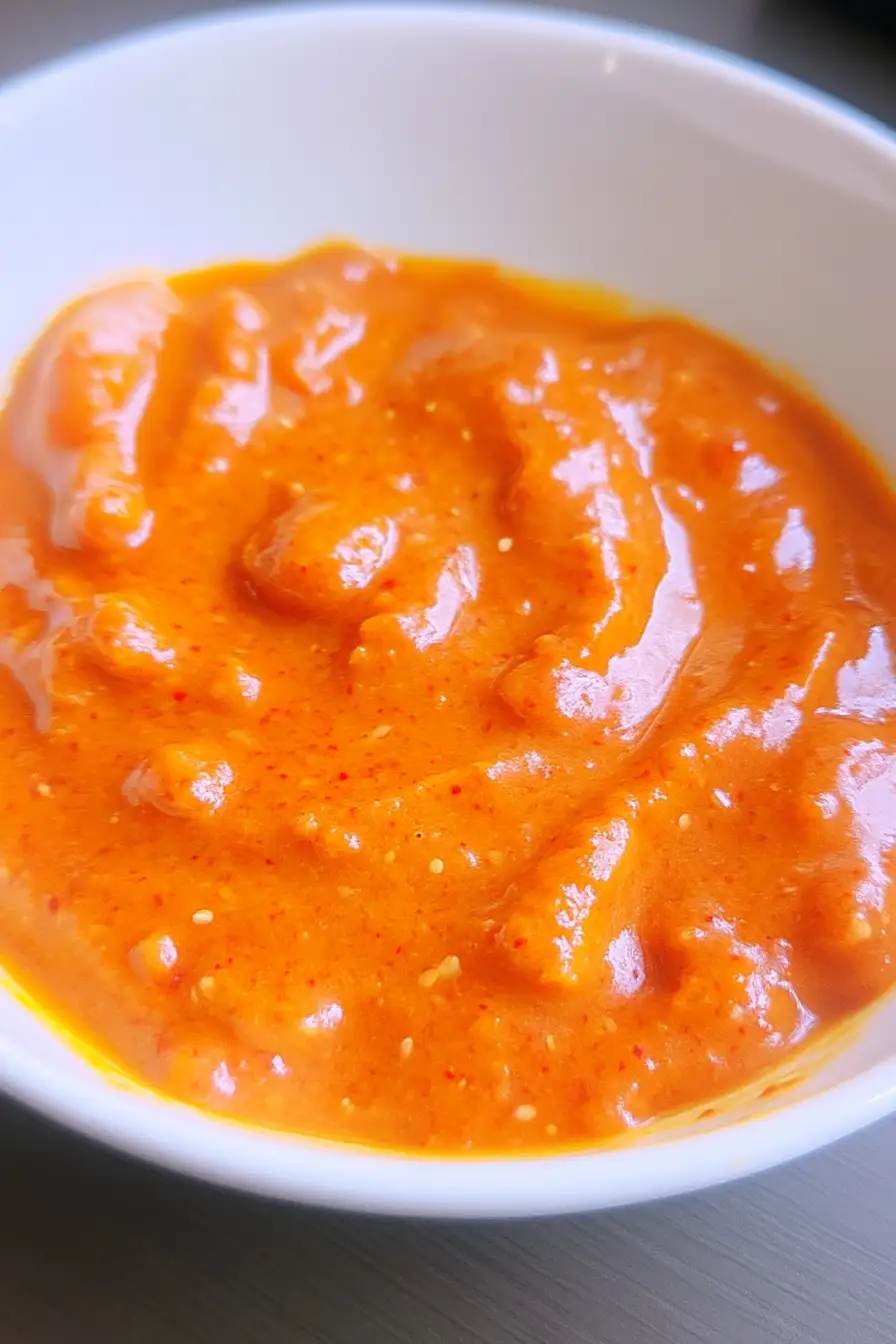
I developed this creamy gochujang sauce about two years ago when I wanted something spicy to drizzle on grain bowls but didn’t want the thick, paste-like texture of straight gochujang. This sauce blends the fermented Korean chili paste with mayo, rice vinegar, and a touch of honey to create something spreadable and pourable that works on everything from tacos to roasted vegetables. The creamy base tames the heat just enough while keeping that funky, savory depth that makes gochujang so good. I make a jar of this creamy gochujang sauce every week now, it sits in my fridge and goes on rice bowls, wraps, sandwiches, and as a dip for fries. Takes 5 minutes to whisk together, keeps for 2 weeks, and the flavor actually improves after a day or two as everything melds together.
The Secret To Getting It Right
The ratio of gochujang to mayo matters more than you’d think. I use 3 tablespoons of gochujang to 1/2 cup of mayo, which gives you noticeable heat without being overwhelming. Go heavier on the gochujang and the sauce becomes too thick and intensely spicy. Too little and you lose that distinctive fermented flavor that makes this sauce worth making.
Rice vinegar is non-negotiable here. I tried white vinegar once and it was too harsh, and apple cider vinegar added a weird sweetness that clashed with the gochujang. Rice vinegar has a milder acidity that complements the fermented flavors instead of fighting them.
The honey balances the heat and the saltiness from the gochujang. I use exactly 1 tablespoon, less and the sauce tastes one-dimensional, more and it veers into sweet sauce territory. If you’re watching sugar, you can use half the honey, but don’t skip it entirely or the flavors won’t come together properly.
What Goes Into This Sauce
Gochujang is a Korean fermented chili paste made from red chili peppers, glutinous rice, fermented soybeans, and salt. I buy the Mother-in-Law’s brand or the red tub of Chung Jung One from H Mart, but any Korean grocery store brand works. Avoid the squeeze bottles labeled “gochujang sauce” those are pre-diluted and won’t give you the right flavor concentration.
For the mayo, I use regular full-fat mayo like Hellmann’s or Kewpie if I have it. Kewpie has a richer flavor because it’s made with only egg yolks, but regular mayo works fine. Light mayo makes the sauce taste thin and watery, don’t use it. The sesame oil needs to be toasted sesame oil (the dark brown kind), not the light refined version, because you need that nutty, roasted flavor.
Ingredients
- 3 tablespoons gochujang paste
- 1/2 cup mayonnaise (full-fat)
- 2 tablespoons rice vinegar
- 1 tablespoon honey
- 1 teaspoon toasted sesame oil
- 1 teaspoon soy sauce
- 1 clove garlic, grated or minced
- 1-3 tablespoons water, to thin
Making The Gochujang Sauce
- Put the gochujang in a medium bowl. Add about 2 tablespoons of the mayo and whisk them together until smooth. This creates a base that’s easier to incorporate with the rest of the ingredients. If you add all the mayo at once, you end up with lumps.
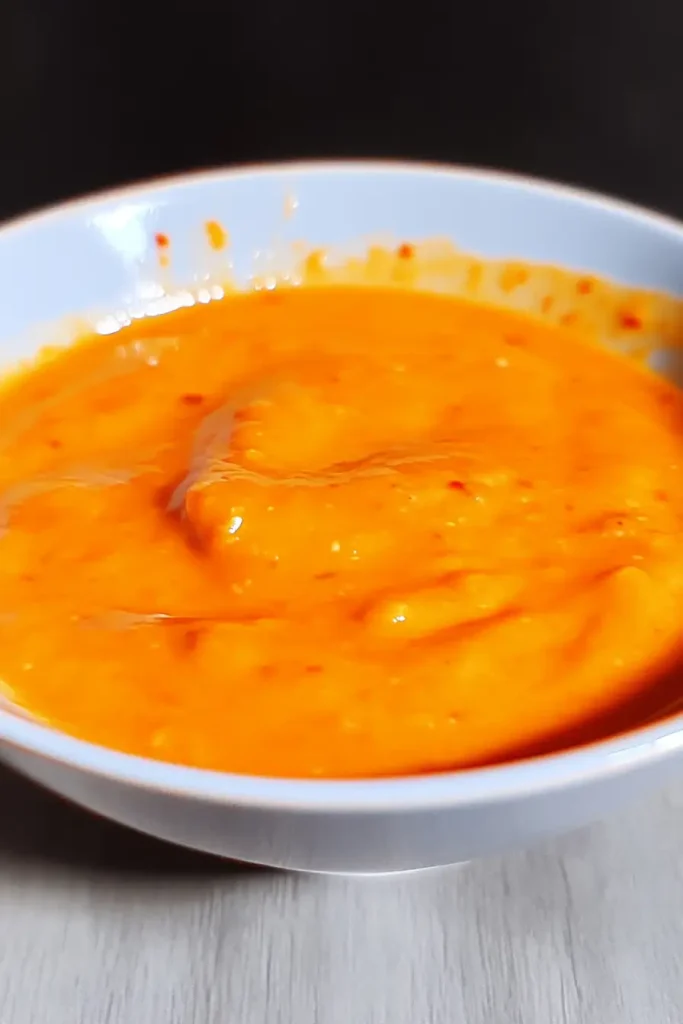
- Add the remaining mayo, rice vinegar, honey, sesame oil, and soy sauce. Whisk everything together for about 30 seconds until you have a uniform orange-red sauce with no streaks of white mayo visible.
- Use a microplane or very fine grater to grate the garlic directly into the sauce. Minced garlic works too, but grated garlic distributes more evenly and you won’t get chunks of raw garlic in bites. Whisk it in.
- Check the consistency. The sauce should be thick enough to cling to a spoon but thin enough to drizzle. Add water 1 tablespoon at a time, whisking after each addition, until you reach the consistency you want. I usually add 2 tablespoons for a drizzle-able sauce, 1 tablespoon if I’m using it as a dip.
- Taste it. The flavor should hit spicy, savory, tangy, and slightly sweet all at once. If it’s too spicy, add another tablespoon of mayo. Too bland, add more gochujang or a splash more soy sauce. Too thick, add more water.
- Transfer to a jar or airtight container and refrigerate for at least 30 minutes before using. The flavors meld and improve during this time, though you can use it immediately if needed.
How Long Does This Last
Store the sauce in an airtight container or jar in the refrigerator for up to 2 weeks. I use a small mason jar with a tight lid. The sauce might separate slightly as it sits, just give it a good stir before using and it comes right back together.
I don’t recommend freezing this sauce. The mayo breaks down when frozen and thawed, creating a grainy, separated texture that doesn’t fix itself even with vigorous stirring. It’s quick enough to make that I just whip up a fresh batch every other week.
What I’ve Learned From Making This Gochujang Sauce
- Grate the garlic instead of mincing it. Grated garlic distributes evenly throughout the sauce, while minced garlic tends to clump. If you don’t have a microplane, use a garlic press.
- Let it sit before serving if you have time. The flavors really do improve after 30 minutes to an hour in the fridge. The garlic mellows slightly and everything integrates better.
- Adjust the water based on how you’re using it. For drizzling over bowls, go thinner (2-3 tablespoons water). For spreading on sandwiches or using as a dip, keep it thicker (1 tablespoon water or none).
- If your gochujang is particularly spicy, start with 2 tablespoons instead of 3 and add more to taste. Different brands have different heat levels, some Korean brands are significantly hotter than the Americanized versions.
- Don’t skip the sesame oil. I tried making this without it once to save a step, and the sauce tasted flat. That tiny amount of sesame oil adds a depth that’s hard to describe but definitely noticeable when it’s missing.
- Use fresh garlic, not jarred. The jarred stuff has an off flavor that comes through strongly in a raw sauce like this. If you don’t have fresh garlic, use 1/4 teaspoon garlic powder instead.
Where This Gochujang Sauce Shines
I use this most often on Korean-style rice bowls with whatever vegetables and protein I have around, usually roasted broccoli, carrots, and either fried eggs or leftover chicken. It also works as a sandwich spread, particularly on anything with avocado or turkey. The creaminess replaces mayo while adding actual flavor.
It makes a good dip for french fries, sweet potato fries, or vegetables. I’ve served it alongside raw carrots, cucumbers, and bell peppers at parties and it always gets eaten. The spice level makes it more interesting than ranch but it’s still accessible enough that most people enjoy it.
For tacos, I use this instead of regular sauce, it’s particularly good on fish tacos or Korean-Mexican fusion tacos with bulgogi beef. I’ve also tossed it with cold noodles (soba or ramen) for a quick lunch, and stirred it into scrambled eggs, though that’s definitely an acquired taste.
What People Usually Ask
Is this very spicy? Moderately spicy, less hot than sriracha but more than a mild hot sauce. The mayo tames the heat significantly. If you’re sensitive to spice, start with 2 tablespoons of gochujang instead of 3.
Can I make this vegan? Yes, use vegan mayo like Just Mayo or Vegenaise. The texture and flavor work exactly the same way. Replace the honey with maple syrup or agave.
What if I can’t find gochujang? There’s not a great substitute that gives you the same fermented flavor, but you could try mixing sriracha with a tiny bit of miso paste. It won’t taste the same but it’ll give you spicy and funky. Or just order gochujang online, it’s shelf-stable and lasts for months.
Can I use this as a marinade? Not really. It’s a finishing sauce, not a marinade. The mayo would separate and burn if you tried to grill or roast something coated in it. Use straight gochujang mixed with soy sauce and garlic for marinades instead.
Mine turned out really thick. What happened? You either used too much gochujang or didn’t add enough water. Add water 1 tablespoon at a time until you get the consistency you want. Remember, you can always thin it but you can’t thicken it without adding more gochujang.
Does this taste like Chipotle’s sauce? No, completely different flavor profile. Gochujang has a fermented, umami depth that’s distinctly Korean. If you want something that tastes like Chipotle, you’d need to make a sauce based on chipotle peppers and adobo.
Can I use Greek yogurt instead of mayo? I haven’t tried it, but I think the tanginess of Greek yogurt would clash with the rice vinegar. If you’re avoiding mayo for health reasons, try it with half mayo, half Greek yogurt as a starting point.
Print
Creamy Gochujang Sauce
- Total Time: 5 minutes
- Yield: 4 servings 1x
- Diet: Vegetarian
Ingredients
- 3 tablespoons gochujang paste
- 1/2 cup mayonnaise (full-fat)
- 2 tablespoons rice vinegar
- 1 tablespoon honey
- 1 teaspoon toasted sesame oil
- 1 teaspoon soy sauce
- 1 clove garlic, grated or minced
- 1–3 tablespoons water, to thin
Instructions
- Whisk gochujang with 2 tablespoons of the mayo in a medium bowl until smooth.
- Add remaining mayo, rice vinegar, honey, sesame oil, and soy sauce. Whisk for 30 seconds until uniform with no white streaks.
- Grate or mince garlic into the sauce and whisk to combine.
- Add water 1 tablespoon at a time, whisking after each addition, until sauce reaches desired consistency. Use 1-2 tablespoons for thick dipping consistency, 2-3 for drizzling.
- Taste and adjust: add more gochujang for heat, mayo to tame spice, or soy sauce for saltiness.
- Transfer to jar and refrigerate at least 30 minutes before serving for best flavor.
Notes
- Use Korean gochujang paste, not pre-diluted gochujang sauce
- Full-fat mayo required light mayo makes sauce watery
- Must use toasted (dark) sesame oil, not refined
- Grate garlic for best distribution
- Stores refrigerated up to 2 weeks in airtight container
- Don’t freeze mayo breaks down and becomes grainy
- For less heat, start with 2 tablespoons gochujang
- Flavor improves after sitting 30+ minutes
- Prep Time: 5 minutes
- Cook Time: 0 minutes
- Category: Sauce
- Method: Mixing
- Cuisine: Korean-Inspired
Nutrition
- Serving Size: ¼ cup
- Calories: 180 kcal
- Sugar: 4 g
- Sodium: 480 mg
- Fat: 16 g
- Saturated Fat: 2.5 g
- Unsaturated Fat: 13 g
- Trans Fat: 0 g
- Carbohydrates: 8 g
- Fiber: 1 g
- Protein: 2 g
- Cholesterol: 10 mg