
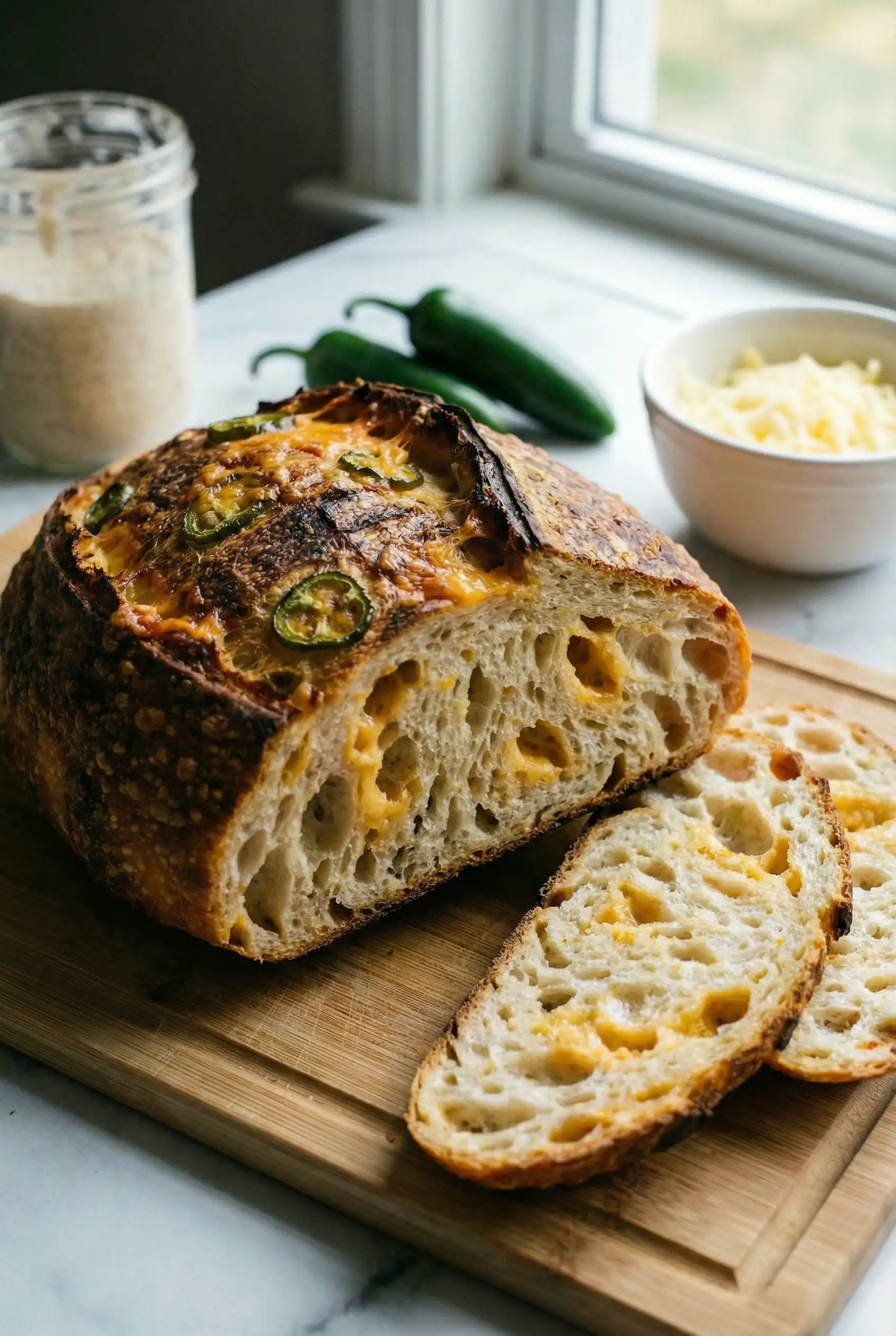
Jalapeño cheddar sourdough is one of those breads I keep coming back to, no matter what else I’m baking. I made my first loaf on a cold Sunday afternoon just to use up some leftover sharp cheddar, and honestly, it’s been a regular in my kitchen ever since.
The contrast between that crackly crust, the spicy jalapeño pockets, and the melty cheese tucked throughout the crumb is something you really have to taste to understand.
Ingredients
For the Levain
- 35g bread flour or all-purpose flour (medium protein)
- 38g whole wheat flour
- 70g water
- 7g ripe sourdough starter
For the Main Dough
- 593g bread flour or all-purpose flour (medium protein)
- 132g whole wheat flour
- 42g whole rye flour
- 558g water (divided across two additions)
- 14g salt
- 149g levain (from above)
- 26g honey
- 200g sharp cheddar cheese, shredded or cubed
- 72g jalapeño, finely diced (1–2 large peppers, seeds removed for less heat)
How To Make Jalapeño Cheddar Sourdough
Step 1: Build the Levain Combine the 35g bread flour, 38g whole wheat flour, 70g water, and 7g ripe starter in a small jar or bowl. Stir well, cover loosely, and leave at room temperature for 8 to 12 hours, until bubbly and roughly doubled in size.
Step 2: Mix the Dough Once your levain is ready, combine it with the bread flour, whole wheat flour, rye flour, honey, and most of the water (hold back about 50g). Mix by hand until no dry bits remain and a rough, shaggy dough forms. Cover and let rest for 45 minutes.
Step 3: Add Salt and Remaining Water Dissolve the salt in the reserved 50g of water. Pour it over the dough and squeeze it through with your fingers until fully incorporated. The dough will feel slippery at first, then come back together. Cover and rest for 30 minutes.
Step 4: Stretch and Fold Perform 4 sets of stretch and folds, spacing each set 30 minutes apart. Grab one side of the dough, stretch it upward, and fold it over the center. Rotate the bowl 90 degrees and repeat until you’ve gone all the way around. During the second set, scatter in the diced jalapeños and shredded cheddar, folding them in as you go.
Step 5: Bulk Fermentation After the final fold, cover the dough and let it ferment at room temperature for 4 to 6 hours, until it has grown about 75% to 80% and looks airy with visible bubbles along the sides. Timing will vary depending on your kitchen temperature.
Step 6: Pre-Shape Turn the dough onto a lightly floured surface. Using a bench scraper and your hand, shape it into a loose round by dragging it toward you, building surface tension. Let it rest uncovered for 20 to 30 minutes.
Step 7: Final Shape Flour your banneton well (rice flour works great here). Shape the dough into a round or batard by folding the sides in, rolling it tight, and placing it seam-side up in the proofing basket. Cover with a shower cap or plastic wrap.
Step 8: Cold Proof Refrigerate the shaped dough for 8 to 16 hours (overnight works well). The cold proof deepens flavor and makes scoring much easier.
Step 9: Preheat and Score Place your Dutch oven in the oven and preheat to 500°F (260°C) for at least 45 minutes. When ready, turn the dough out onto parchment paper, score the top with a sharp lame or razor blade at a 30 to 45 degree angle, and immediately lower it into the hot Dutch oven.
Step 10: Bake Bake covered at 500°F for 20 minutes, then remove the lid, drop the temperature to 450°F (230°C), and bake for another 20 to 25 minutes until deeply golden brown. The crust should sound hollow when you tap the bottom. Transfer to a wire rack and wait at least 1 hour before slicing.
What Makes This Loaf Different from Regular Sourdough
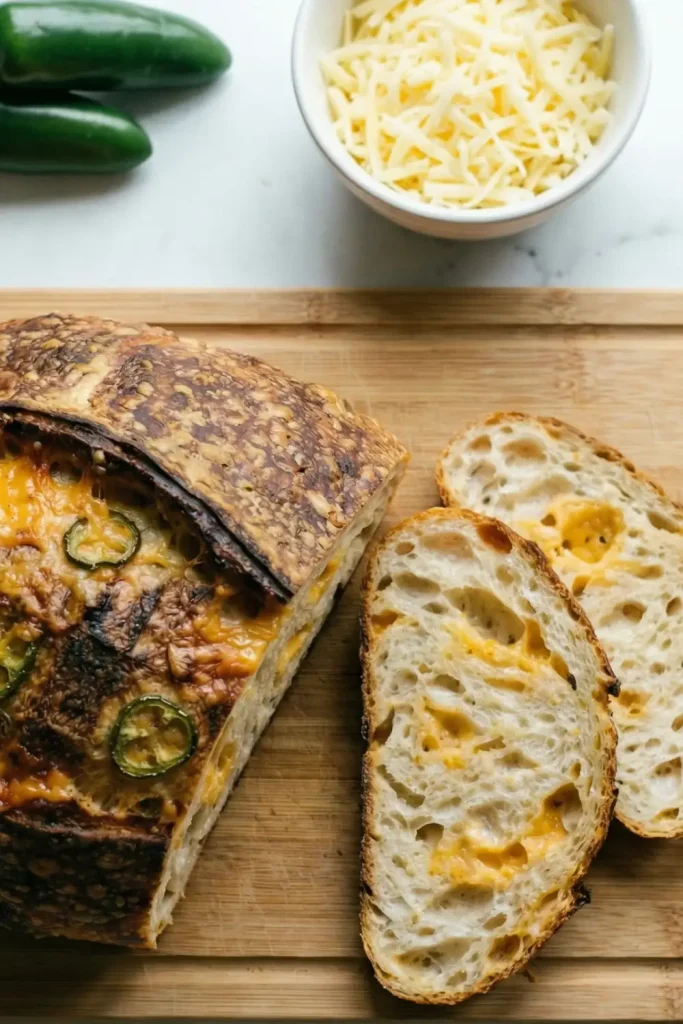
Adding jalapeños and cheddar to a sourdough isn’t just a flavor upgrade. The fat from the cheese actually affects the crumb structure, making it a little tighter and more tender in spots compared to a plain country loaf. That’s not a bad thing here. It means every slice holds together beautifully, especially when you’re using it for a grilled cheese or a thick sandwich.
The honey in this dough is subtle, but it does two things. It gives the crust a slightly deeper color during baking and gently rounds out the heat from the peppers. You won’t taste sweetness outright. It’s more of a background note that balances the sharpness of the cheese.
How to Handle the Cheese and Jalapeños
This is where a lot of bakers run into trouble. Fresh or pickled jalapeños both work, but you need to pat them dry before folding them into the dough. Extra moisture from the peppers throws off the hydration and can make the dough sticky and hard to shape.
For the cheese, shredding or cubing a block yourself makes a noticeable difference. Pre-shredded cheese has anti-caking additives that prevent it from melting into the crumb the way you want. Sharp cheddar is the move here. Extra sharp is even better if you want a more pronounced savory flavor throughout the loaf.
Try to distribute both evenly during your stretch and fold sets rather than dumping everything in at once. You’ll get a more consistent result slice to slice. If you enjoy other cheesy bakes, my Crispy Cheese Croquettes use a similar approach to maximizing cheese flavor in every bite.
Scoring, Baking, and Getting a Good Oven Spring
Scoring jalapeño cheddar sourdough can be trickier than a plain loaf because the inclusions interrupt the surface. A single deep score down the center of the loaf is the most reliable option. Don’t go too shallow. You want the blade to pass through at least half an inch, otherwise the bread will burst in unpredictable spots as it expands.
The Dutch oven setup is not optional for this recipe. That trapped steam in the first 20 minutes of baking is what gives the crust its blistered, crackly exterior. Without it, the crust sets too quickly and the loaf won’t open properly. Cast iron works best, but any heavy lidded pot that can handle 500°F will get the job done.
You’ll likely see a bit of cheese escaping and crisping on the bottom of the pot. That’s completely normal and part of what makes this bread smell incredible while it bakes.
Serving Ideas and What to Do with Leftovers
Slice it thick and eat it warm with a generous smear of salted butter. That’s the starting point. From there, it makes an outstanding grilled cheese, especially with a bowl of Creamy Mushroom Soup on the side. The spice from the jalapeños cuts through the richness in a way that just works.
Day-old slices are great for toast topped with avocado and a fried egg. If you’ve got a slightly stale heel left over, cube it for croutons or blend it into breadcrumbs for coating things like my Crispy Cheese Croquettes. Nothing goes to waste with a loaf this good. For another hearty bread-friendly pairing, my Easy Potsticker Soup is a surprisingly good match for a savory slice.
Pro Tips
- Use a kitchen scale. Baking by weight is non-negotiable with sourdough. Volume measurements introduce too much variation in flour and water.
- Pat the jalapeños very dry. Any extra brine left on the peppers will raise your dough’s hydration and make it hard to handle.
- Don’t rush the cold proof. At minimum 8 hours in the fridge, ideally overnight. The flavor is noticeably better and the dough holds its shape much more easily when cold.
- Rice flour in the banneton. Regular flour can stick and absorb into the dough. Rice flour stays dry and releases cleanly every time.
- Score confidently. One quick, decisive cut is better than a hesitant, dragging motion. A cold dough from the fridge scores more cleanly than room-temperature dough.
- Let it cool fully. Cutting into hot sourdough releases steam and leaves the crumb gummy. One hour minimum, two hours is better.
- Scaling up: This recipe makes one standard loaf. To make two, simply double everything, including the levain build.
Frequently Asked Questions
Can I make this with fresh jalapeños instead of pickled?
Fresh jalapeños give you a brighter, more vegetal heat while pickled ones are a little mellower and more tangy. Either way, dice them finely and pat them completely dry before folding them into the dough. Leaving the seeds in will make the final loaf noticeably spicier.
Why did my cheddar melt out and burn on the bottom of the Dutch oven?
That’s actually normal and nothing to worry about. Any cheese near the surface or scoring line will escape and caramelize during baking. It’s part of the experience. If it’s happening excessively, try folding the cheese in smaller pieces so it’s more evenly distributed inside the dough rather than sitting on the surface.
How do I store this bread and how long does it keep?
Store it at room temperature wrapped in a clean kitchen towel or placed cut-side down on a board. It keeps well for 2 days. Avoid the refrigerator, which draws moisture out and makes sourdough go stale faster. For longer storage, slice the cooled loaf, wrap individually in plastic, and freeze for up to 3 months. Reheat slices directly in the toaster or a 350°F oven for a few minutes.
Can I use all-purpose flour instead of bread flour?
You can use all-purpose flour and the loaf will still turn out well. Bread flour has a higher protein content which gives you slightly more structure, a chewier crumb, and a better rise. If you switch to all-purpose, reduce the water by about 20 to 30 grams to compensate for the lower absorption.
Print
Jalapeño Cheddar Sourdough
- Total Time: 18 hours (includes rise/fermentation)
- Yield: 1 large loaf (about 10–12 slices) 1x
- Diet: Vegetarian
Ingredients
For the Levain
- 35g bread flour or all-purpose flour (medium protein)
- 38g whole wheat flour
- 70g water
- 7g ripe sourdough starter
For the Main Dough
- 593g bread flour or all-purpose flour (medium protein)
- 132g whole wheat flour
- 42g whole rye flour
- 558g water (divided across two additions)
- 14g salt
- 149g levain (from above)
- 26g honey
- 200g sharp cheddar cheese, shredded or cubed
- 72g jalapeño, finely diced (1–2 large peppers, seeds removed for less heat)
Instructions
Step 1: Build the Levain Combine the 35g bread flour, 38g whole wheat flour, 70g water, and 7g ripe starter in a small jar or bowl. Stir well, cover loosely, and leave at room temperature for 8 to 12 hours, until bubbly and roughly doubled in size.
Step 2: Mix the Dough Once your levain is ready, combine it with the bread flour, whole wheat flour, rye flour, honey, and most of the water (hold back about 50g). Mix by hand until no dry bits remain and a rough, shaggy dough forms. Cover and let rest for 45 minutes.
Step 3: Add Salt and Remaining Water Dissolve the salt in the reserved 50g of water. Pour it over the dough and squeeze it through with your fingers until fully incorporated. The dough will feel slippery at first, then come back together. Cover and rest for 30 minutes.
Step 4: Stretch and Fold Perform 4 sets of stretch and folds, spacing each set 30 minutes apart. Grab one side of the dough, stretch it upward, and fold it over the center. Rotate the bowl 90 degrees and repeat until you’ve gone all the way around. During the second set, scatter in the diced jalapeños and shredded cheddar, folding them in as you go.
Step 5: Bulk Fermentation After the final fold, cover the dough and let it ferment at room temperature for 4 to 6 hours, until it has grown about 75% to 80% and looks airy with visible bubbles along the sides. Timing will vary depending on your kitchen temperature.
Step 6: Pre-Shape Turn the dough onto a lightly floured surface. Using a bench scraper and your hand, shape it into a loose round by dragging it toward you, building surface tension. Let it rest uncovered for 20 to 30 minutes.
Step 7: Final Shape Flour your banneton well (rice flour works great here). Shape the dough into a round or batard by folding the sides in, rolling it tight, and placing it seam-side up in the proofing basket. Cover with a shower cap or plastic wrap.
Step 8: Cold Proof Refrigerate the shaped dough for 8 to 16 hours (overnight works well). The cold proof deepens flavor and makes scoring much easier.
Step 9: Preheat and Score Place your Dutch oven in the oven and preheat to 500°F (260°C) for at least 45 minutes. When ready, turn the dough out onto parchment paper, score the top with a sharp lame or razor blade at a 30 to 45 degree angle, and immediately lower it into the hot Dutch oven.
Step 10: Bake Bake covered at 500°F for 20 minutes, then remove the lid, drop the temperature to 450°F (230°C), and bake for another 20 to 25 minutes until deeply golden brown. The crust should sound hollow when you tap the bottom. Transfer to a wire rack and wait at least 1 hour before slicing.
Notes
- Use a kitchen scale. Baking by weight is non-negotiable with sourdough. Volume measurements introduce too much variation in flour and water.
- Pat the jalapeños very dry. Any extra brine left on the peppers will raise your dough’s hydration and make it hard to handle.
- Don’t rush the cold proof. At minimum 8 hours in the fridge, ideally overnight. The flavor is noticeably better and the dough holds its shape much more easily when cold.
- Rice flour in the banneton. Regular flour can stick and absorb into the dough. Rice flour stays dry and releases cleanly every time.
- Score confidently. One quick, decisive cut is better than a hesitant, dragging motion. A cold dough from the fridge scores more cleanly than room-temperature dough.
- Let it cool fully. Cutting into hot sourdough releases steam and leaves the crumb gummy. One hour minimum, two hours is better.
- Scaling up: This recipe makes one standard loaf. To make two, simply double everything, including the levain build.
- Prep Time: 20 minutes
- Cook Time: 40 minutes
- Category: Bread
- Method: Baking
- Cuisine: American
Nutrition
- Serving Size: 1 slice
- Calories: 220 kcal
- Sugar: 1 g
- Sodium: 320 mg
- Fat: 8 g
- Saturated Fat: 4.5 g
- Unsaturated Fat: 3 g
- Trans Fat: 0 g
- Carbohydrates: 28 g
- Fiber: 1.5 g
- Protein: 8 g
- Cholesterol: 20 mg