

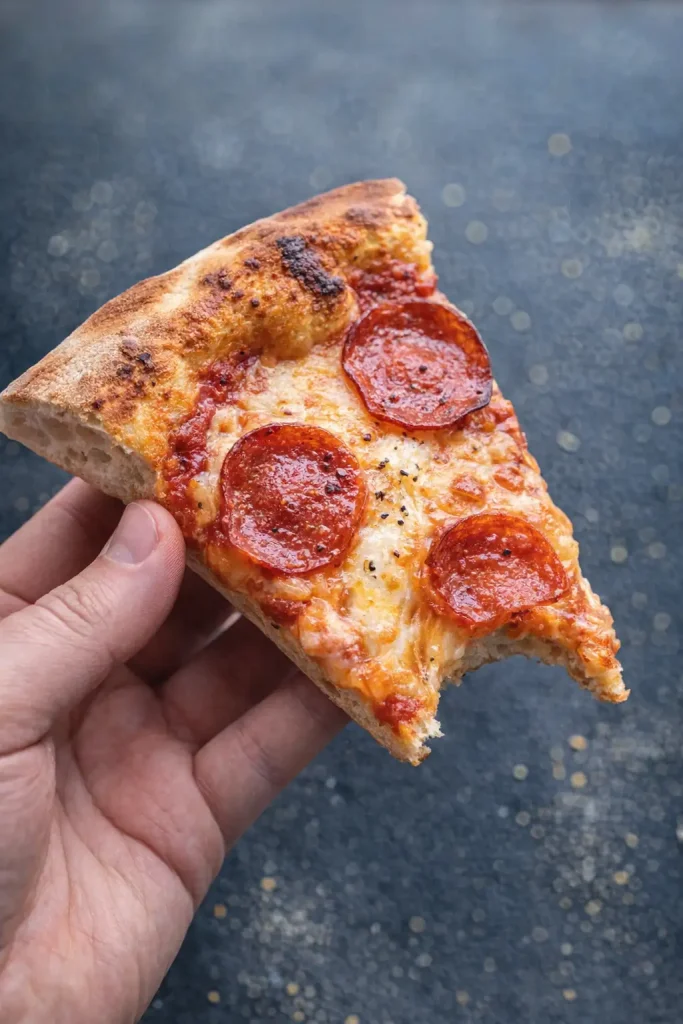
Pepperoni pizza sourdough is honestly one of those bakes I keep coming back to every Friday night, when I want something more exciting than a plain loaf but still don’t want to fuss with a full pizza setup. The tang from the fermented dough mixed with gooey mozzarella and crispy pepperoni is just really, really good.
Ingredients
For the Pizza Dough:
- 530 g bread flour or all-purpose flour
- 320 g water
- 110 g sourdough starter (fed or discard)
- 10 g sea salt
For the Toppings:
- Marinara sauce
- Shredded mozzarella
- Pepperoni slices
- Dried oregano or basil, to sprinkle
- Sea salt, to sprinkle
How To Make Your Pepperoni Pizza Sourdough
- Mix the dough. Combine your sourdough starter and water in a large bowl and stir briefly. Add the bread flour and sea salt, then mix with your hands or a dough scraper until no dry flour remains. Cover and let rest for 30 minutes.
- Begin stretch and folds. Over the next 2 hours, perform 4 sets of stretch and folds, spacing them 30 minutes apart. To do one set, grab the dough from one side, stretch it up, and fold it over the center. Rotate the bowl and repeat 3 more times.
- Bulk ferment. After completing the folds, leave the covered dough at room temperature (around 75°F / 24°C) for 4 to 6 more hours until it has grown by about 50% and looks bubbly at the edges.
- Shape and add toppings. Turn the dough onto a lightly floured surface. Gently press it into a large oval or rectangle. Spread a thin layer of marinara sauce over the surface, scatter shredded mozzarella and pepperoni slices, then fold the dough over itself like a letter and shape it into a round boule or oval batard.
- Cold proof. Place the shaped dough seam-side up into a floured banneton or a bowl lined with a floured kitchen towel. Cover and refrigerate for 12 to 16 hours (overnight works great).
- Preheat your oven. About 45 minutes before baking, place a Dutch oven with its lid inside your oven and preheat to 500°F (260°C). The very hot Dutch oven is what gives you that crackly crust.
- Score and bake. Remove the dough from the fridge. Carefully flip it onto a piece of parchment paper. Score the top with a sharp lame or razor blade at a 45-degree angle. Lower it into the hot Dutch oven using the parchment as a sling, add lid, and bake for 20 minutes.
- Finish uncovered. Remove the lid, reduce the oven to 450°F (230°C), and bake another 20 to 25 minutes until the crust is deep golden brown. Sprinkle dried oregano and a pinch of sea salt over the top in the last 5 minutes if you like.
- Cool before slicing. This part is hard, I know, but let the loaf rest on a wire rack for at least 45 minutes before cutting in. Cutting too early lets all the steam escape and makes the crumb gummy.
Why Sourdough Dough Makes Such a Good Pizza Base
The long, slow fermentation that sourdough goes through does two things at once. First, it builds a complex, slightly tangy flavor that commercial yeast just can’t replicate. Second, it breaks down some of the gluten proteins in the flour, which a lot of people find easier to digest than a standard yeasted dough.
When you use that same fermented dough as the base for a pepperoni pizza, you get a crust that already has depth and character before a single topping hits it. The chew is different too, more substantial and satisfying, and the bottom crisps up beautifully if you bake it on a preheated surface. If you love the idea of fermented breads in general, my No-Knead Italian Artisan Bread uses a similar slow-rise method and is a great companion recipe to have in your rotation.
How to Get Crispy Pepperoni on Sourdough
One thing I learned the hard way is that pepperoni placement matters. When you fold the pepperoni into the dough during shaping, some pieces end up buried and steamed rather than crisped. That’s still delicious, but if you want those little cupped, slightly charred edges on top, reserve a handful of slices to scatter directly on the surface right before the loaf goes into the oven (after scoring).
The fat that renders out of the pepperoni bastes the top of the crust as it bakes, and the direct oven heat gets those edges going in a way buried pepperoni simply won’t. Low-moisture mozzarella is also worth seeking out here, since fresh mozzarella releases quite a bit of water and can make the inside of the loaf wetter than you want.
Sourdough Starter Notes for This Recipe
If your starter is active and recently fed, you’re ready to go. A bubbly starter that has peaked (doubled and just started to fall back) gives you the most reliable rise. If you’re using discard, choose some that’s only a few days old so it still has enough activity to leaven the dough. Older discard will result in a denser loaf, though it’ll still taste good.
Not sure if your starter is ready? Drop a small spoonful into a glass of water. If it floats, you’re good. If it sinks straight to the bottom, give it another feed and wait a few more hours. The Cottage Cheese Protein Bagels on this site also call for an active starter if you want to put yours to work in two ways on the same weekend.
What to Serve Alongside This Loaf
This sourdough loaf is filling on its own, but a little warm marinara sauce on the side for dipping never hurts. I also like a simple arugula salad dressed with olive oil and lemon to cut through the richness of the cheese and pepperoni. If you’re putting together a bigger spread, it goes really well next to a bowl of tomato soup or alongside Easy Calzones for a full Italian-inspired meal. Toasted slices make an excellent next-day snack too, especially spread with a little butter or used as the bread in a grilled cheese sandwich.
Pro Tips for the Best Result
- Don’t skip the cold proof. Refrigerating the shaped dough overnight makes it firmer and much easier to score cleanly. It also deepens the sour flavor considerably.
- Use a Dutch oven if you can. The trapped steam during the first 20 minutes is what makes the crust crackle. A baking steel or stone works too, but you’ll need to add steam another way (like a tray of boiling water on the lower rack).
- Quarter your pepperoni slices. Cutting round slices into fourths means they distribute more evenly inside the dough without creating pockets of grease in one spot.
- Check the bottom. If your oven tends to run hot on the bottom, place a baking sheet on the rack below the Dutch oven to shield the base from burning.
- Freeze extras. This loaf freezes beautifully. Slice it first, wrap individual slices in parchment, and freeze in a zip-lock bag for up to 2 months. Pop slices straight into the toaster from frozen.
Frequently Asked Questions
Can I make this pepperoni pizza sourdough ahead of time?
Honestly it’s better that way. You can mix the dough and do the bulk ferment the day before, then shape it and put it straight in the fridge for the cold proof. Bake the next morning or evening whenever it works for you. The dough can sit in the fridge for up to 48 hours without any problem.
What can I substitute for bread flour?
All-purpose flour works well here and will give you a slightly softer crumb with a little less chew. The overall structure holds up fine. Avoid whole wheat flour as a full swap since it absorbs water differently and the dough can end up quite dense. A 10 to 20% whole wheat blend is fine if you add a tablespoon or two of extra water.
Why did my sourdough not rise properly?
The most common reason is an under-active starter. Make sure yours has at least doubled in size after feeding before you use it. Room temperature also plays a big role: if your kitchen is below 70°F (21°C), the bulk ferment will take longer than the times listed. Just watch the dough’s behavior rather than the clock.
How do I store leftover slices?
Wrap slices in a clean kitchen towel or beeswax wrap and keep at room temperature for up to 2 days. For longer storage, the fridge actually dries sourdough out faster than the counter does, so freezing is the better option. Reheat slices in a dry skillet over medium heat for a couple of minutes per side to bring the crust back to life.
Print
Pepperoni Pizza Sourdough
- Total Time: 9–12 hours
- Yield: 1 large pizza (6–8 slices) 1x
Ingredients
For the Pizza Dough:
- 530 g bread flour or all-purpose flour
- 320 g water
- 110 g sourdough starter (fed or discard)
- 10 g sea salt
For the Toppings:
- Marinara sauce
- Shredded mozzarella
- Pepperoni slices
- Dried oregano or basil, to sprinkle
- Sea salt, to sprinkle
Instructions
- Mix the dough. Combine your sourdough starter and water in a large bowl and stir briefly. Add the bread flour and sea salt, then mix with your hands or a dough scraper until no dry flour remains. Cover and let rest for 30 minutes.
- Begin stretch and folds. Over the next 2 hours, perform 4 sets of stretch and folds, spacing them 30 minutes apart. To do one set, grab the dough from one side, stretch it up, and fold it over the center. Rotate the bowl and repeat 3 more times.
- Bulk ferment. After completing the folds, leave the covered dough at room temperature (around 75°F / 24°C) for 4 to 6 more hours until it has grown by about 50% and looks bubbly at the edges.
- Shape and add toppings. Turn the dough onto a lightly floured surface. Gently press it into a large oval or rectangle. Spread a thin layer of marinara sauce over the surface, scatter shredded mozzarella and pepperoni slices, then fold the dough over itself like a letter and shape it into a round boule or oval batard.
- Cold proof. Place the shaped dough seam-side up into a floured banneton or a bowl lined with a floured kitchen towel. Cover and refrigerate for 12 to 16 hours (overnight works great).
- Preheat your oven. About 45 minutes before baking, place a Dutch oven with its lid inside your oven and preheat to 500°F (260°C). The very hot Dutch oven is what gives you that crackly crust.
- Score and bake. Remove the dough from the fridge. Carefully flip it onto a piece of parchment paper. Score the top with a sharp lame or razor blade at a 45-degree angle. Lower it into the hot Dutch oven using the parchment as a sling, add lid, and bake for 20 minutes.
- Finish uncovered. Remove the lid, reduce the oven to 450°F (230°C), and bake another 20 to 25 minutes until the crust is deep golden brown. Sprinkle dried oregano and a pinch of sea salt over the top in the last 5 minutes if you like.
- Cool before slicing. This part is hard, I know, but let the loaf rest on a wire rack for at least 45 minutes before cutting in. Cutting too early lets all the steam escape and makes the crumb gummy.
Notes
- Don’t skip the cold proof. Refrigerating the shaped dough overnight makes it firmer and much easier to score cleanly. It also deepens the sour flavor considerably.
- Use a Dutch oven if you can. The trapped steam during the first 20 minutes is what makes the crust crackle. A baking steel or stone works too, but you’ll need to add steam another way (like a tray of boiling water on the lower rack).
- Quarter your pepperoni slices. Cutting round slices into fourths means they distribute more evenly inside the dough without creating pockets of grease in one spot.
- Check the bottom. If your oven tends to run hot on the bottom, place a baking sheet on the rack below the Dutch oven to shield the base from burning.
- Freeze extras. This loaf freezes beautifully. Slice it first, wrap individual slices in parchment, and freeze in a zip-lock bag for up to 2 months. Pop slices straight into the toaster from frozen.
- Prep Time: 20 minutes
- Sourdough Fermentation: 8–12 hours
- Cook Time: 18 minutes
- Category: Main Course
- Method: Baking
- Cuisine: Italian
Nutrition
- Serving Size: 1 slice
- Calories: 320 kcal
- Sugar: 3 g
- Sodium: 700 mg
- Fat: 15 g
- Saturated Fat: 6 g
- Unsaturated Fat: 8 g
- Trans Fat: 0 g
- Carbohydrates: 35 g
- Fiber: 2 g
- Protein: 15 g
- Cholesterol: 35 mg