
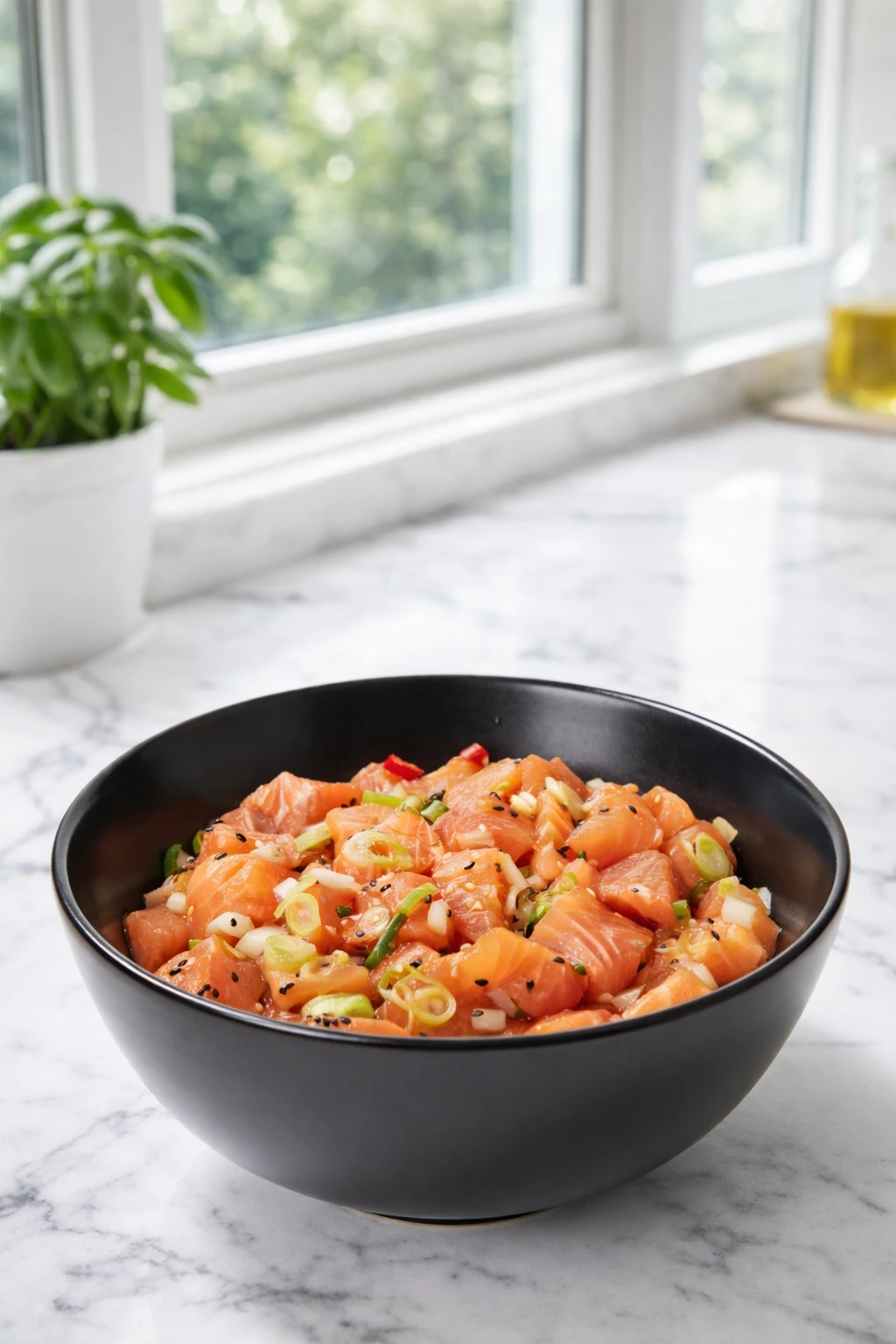
This salmon poke recipe has been my go-to for warm-weather lunches ever since I had a bowl at a tiny spot in Honolulu a few summers back. Fresh sushi-grade salmon gets tossed in a savory sesame soy marinade with a hit of ginger and just enough sriracha to keep things interesting. It comes together in under 20 minutes, no cooking required, and honestly tastes better than most versions I’ve ordered out.
Poke bowls have exploded in popularity for good reason. The combination of silky raw salmon, nutty sesame oil, and bright green onion is simple but genuinely satisfying. I make this on Sunday afternoons and eat it over rice through the week. If you’ve been on the fence about working with raw fish at home, this recipe is a good place to start.
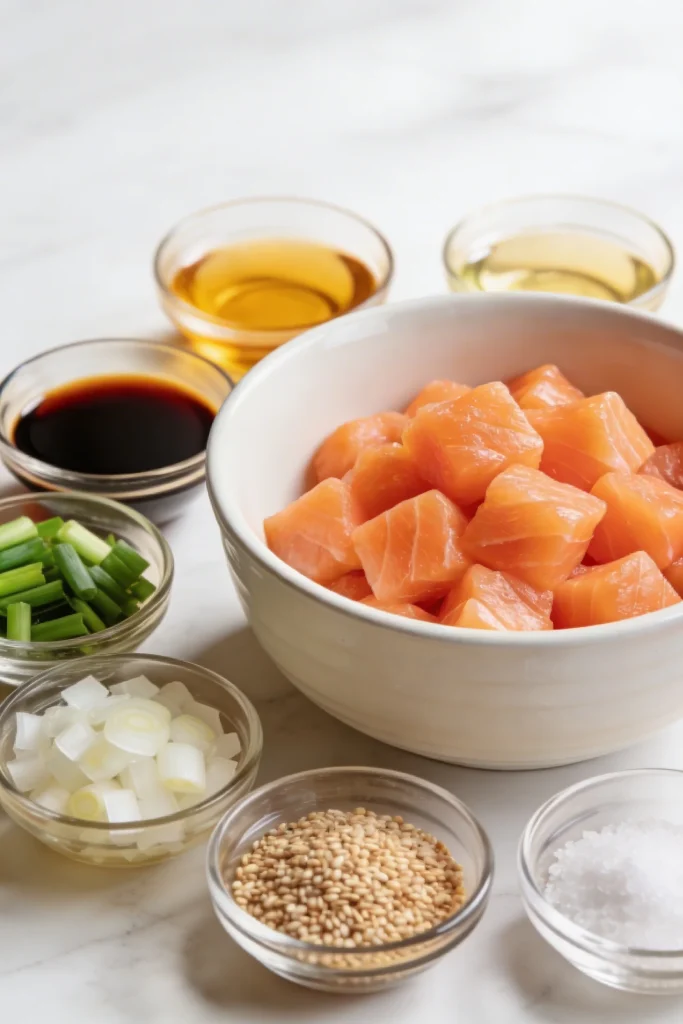
Salmon Poke Ingredients
For the Salmon Poke
- 1 lb sushi-grade salmon, skin removed, cut into ¾-inch cubes
- 2 to 3 tablespoons liquid aminos (or soy sauce), to taste
- 1 tablespoon toasted sesame oil, to taste
- 2 teaspoons rice vinegar, to taste
- 1 to 3 teaspoons sriracha, to taste
- 2 teaspoons fresh ginger, peeled and finely grated
- 2 stalks green onion, finely chopped
- 2 teaspoons sesame seeds (white or black, or a mix)
- Sea salt, to taste
For Serving (Optional)
- Steamed short-grain white rice or cauliflower rice
- Sliced cucumber, edamame, shredded nori, or avocado
How To Make Salmon Poke Recipe
- Cube the salmon. Pat the salmon dry with paper towels and cut it into even ¾-inch cubes. Uniform pieces marinate more consistently and look better in the bowl.
- Make the marinade. In a medium mixing bowl, whisk together the liquid aminos, toasted sesame oil, rice vinegar, grated ginger, and sriracha. Start with the lower amounts and adjust to your taste once everything is combined.
- Season and toss. Add the salmon cubes to the bowl. Gently fold everything together until the fish is evenly coated. Taste the marinade on a piece of salmon and adjust the salt, heat, or acid levels now.
- Add the aromatics. Fold in the chopped green onion and sesame seeds. Give it one more gentle stir.
- Rest briefly. Let the salmon poke sit for 5 to 10 minutes at room temperature before serving. This short marinating time lets the flavors meld without the acid beginning to cook the fish.
- Assemble your bowl. Serve the salmon poke over warm rice or your base of choice. Add any desired toppings and an extra drizzle of sesame oil if you like.
How to Choose the Right Salmon
The most important thing about making salmon poke at home is sourcing properly. You need sushi-grade or sashimi-grade salmon, which means it’s been frozen to a temperature that eliminates parasites. Most good fish counters and Japanese grocery stores carry it. Wild-caught king salmon (Chinook) and sockeye are both excellent choices, with sockeye leaning slightly leaner and king salmon being richer in fat.
Ask your fishmonger the day you plan to make the poke for the freshest possible fish. Fresh sushi-grade salmon should smell like the ocean, not fishy, and the flesh should be bright with good color. If it looks dull or smells off, skip it and come back another day.
Building a Better Poke Bowl
The salmon poke itself is the star, but what you put under and around it matters. Short-grain Japanese white rice is the traditional base, cooked with a touch of rice vinegar and salt. Brown rice or cauliflower rice work well if you want something lighter.
From there, toppings are flexible. Sliced cucumber adds crunch. Edamame brings a little protein and color. Avocado makes it creamy and rich. Shredded nori, pickled ginger, and a drizzle of spicy mayo are all great additions if you want to go a little further. The key is not overloading the bowl so the salmon stays the focus.
Adjusting the Heat and Flavor
The sriracha quantity in this salmon poke recipe is intentionally variable. One teaspoon gives you a mild warmth that most people enjoy. Three teaspoons brings real heat. If sriracha isn’t your thing, gochujang works nicely and adds a slightly fermented depth that pairs well with the sesame.
The liquid aminos are a great soy sauce alternative for anyone avoiding gluten, but regular soy sauce or tamari both work. Just taste as you go since sodium levels vary between brands. A tiny bit of honey or coconut aminos can round out the flavor if the marinade tastes too sharp.
If you’re a fan of other fresh seafood dishes, you might also enjoy our Asian Chilli Garlic Prawns or this Healthy Tuna Salad for a lighter no-cook option.
Notes
- Always use sushi-grade fish when making raw fish dishes. Don’t substitute with regular supermarket salmon.
- Don’t marinate the salmon for more than 15 to 20 minutes before serving. The acid in the vinegar will start to break down the texture of the fish over time.
- This recipe is best eaten the day it’s made. Leftover marinated salmon stored in the fridge overnight will change in texture but is still safe to eat within 24 hours.
- To scale up for a crowd, this recipe doubles easily. Just mix the marinade in a larger bowl and season gradually.
- If you don’t have a box grater for the ginger, a microplane works even better and gives you a finer, more evenly distributed result.
- For meal prep, keep the salmon and marinade separate until you’re ready to eat. You can prep all the toppings and rice ahead of time and just cube and dress the fish right before serving.
- A sharp knife makes all the difference when cubing raw fish. Take your time and use slow, clean strokes.
Recipe FAQ
Can I make salmon poke ahead of time?
You can prep everything ahead, but keep the salmon and marinade separate until 10 minutes before serving. Once the fish is dressed, the texture starts to change within the hour, so it’s best assembled fresh.
What can I use instead of liquid aminos?
Regular soy sauce or tamari are the most straightforward swaps and work in a 1:1 ratio. Coconut aminos is another option if you want something slightly sweeter and lower in sodium, though you may want to add a pinch of extra salt to compensate.
Can I freeze leftover salmon poke?
Freezing marinated raw salmon isn’t recommended as the texture becomes mushy after thawing. If you have extra sushi-grade salmon before marinating, you can refreeze it once, but after it’s been dressed, plan to eat it that day.
Why does my poke taste too salty?
This usually comes down to the liquid aminos or soy sauce brand you used. Some are significantly saltier than others. Start with 2 tablespoons, taste before adding more, and hold off on any additional sea salt until you’ve tried the dressed fish.
How do I store leftover salmon poke?
Store it in an airtight container in the refrigerator and eat within 24 hours. The flavor is actually quite good the next day, just know the texture of the fish will be softer from the continued marinating.
Print
Salmon Poke Recipe
- Total Time: 15 minutes
- Yield: 2 servings 1x
Ingredients
For the Salmon Poke
- 1 lb sushi-grade salmon, skin removed, cut into ¾-inch cubes
- 2 to 3 tablespoons liquid aminos (or soy sauce), to taste
- 1 tablespoon toasted sesame oil, to taste
- 2 teaspoons rice vinegar, to taste
- 1 to 3 teaspoons sriracha, to taste
- 2 teaspoons fresh ginger, peeled and finely grated
- 2 stalks green onion, finely chopped
- 2 teaspoons sesame seeds (white or black, or a mix)
- Sea salt, to taste
For Serving (Optional)
- Steamed short-grain white rice or cauliflower rice
- Sliced cucumber, edamame, shredded nori, or avocado
Instructions
- Cube the salmon. Pat the salmon dry with paper towels and cut it into even ¾-inch cubes. Uniform pieces marinate more consistently and look better in the bowl.
- Make the marinade. In a medium mixing bowl, whisk together the liquid aminos, toasted sesame oil, rice vinegar, grated ginger, and sriracha. Start with the lower amounts and adjust to your taste once everything is combined.
- Season and toss. Add the salmon cubes to the bowl. Gently fold everything together until the fish is evenly coated. Taste the marinade on a piece of salmon and adjust the salt, heat, or acid levels now.
- Add the aromatics. Fold in the chopped green onion and sesame seeds. Give it one more gentle stir.
- Rest briefly. Let the salmon poke sit for 5 to 10 minutes at room temperature before serving. This short marinating time lets the flavors meld without the acid beginning to cook the fish.
- Assemble your bowl. Serve the salmon poke over warm rice or your base of choice. Add any desired toppings and an extra drizzle of sesame oil if you like.
Notes
- Always use sushi-grade fish when making raw fish dishes. Don’t substitute with regular supermarket salmon.
- Don’t marinate the salmon for more than 15 to 20 minutes before serving. The acid in the vinegar will start to break down the texture of the fish over time.
- This recipe is best eaten the day it’s made. Leftover marinated salmon stored in the fridge overnight will change in texture but is still safe to eat within 24 hours.
- To scale up for a crowd, this recipe doubles easily. Just mix the marinade in a larger bowl and season gradually.
- If you don’t have a box grater for the ginger, a microplane works even better and gives you a finer, more evenly distributed result.
- For meal prep, keep the salmon and marinade separate until you’re ready to eat. You can prep all the toppings and rice ahead of time and just cube and dress the fish right before serving.
- A sharp knife makes all the difference when cubing raw fish. Take your time and use slow, clean strokes.
- Prep Time: 15 minutes
- Cook Time: 0 minutes
- Category: Main Course
- Method: No-Cook
- Cuisine: Hawaiian
Nutrition
- Serving Size: 1 bowl
- Calories: 350 kcal
- Sugar: 4 g
- Sodium: 650 mg
- Fat: 18 g
- Saturated Fat: 3 g
- Unsaturated Fat: 14 g
- Trans Fat: 0 g
- Carbohydrates: 20 g
- Fiber: 3 g
- Protein: 26 g
- Cholesterol: 55 mg