
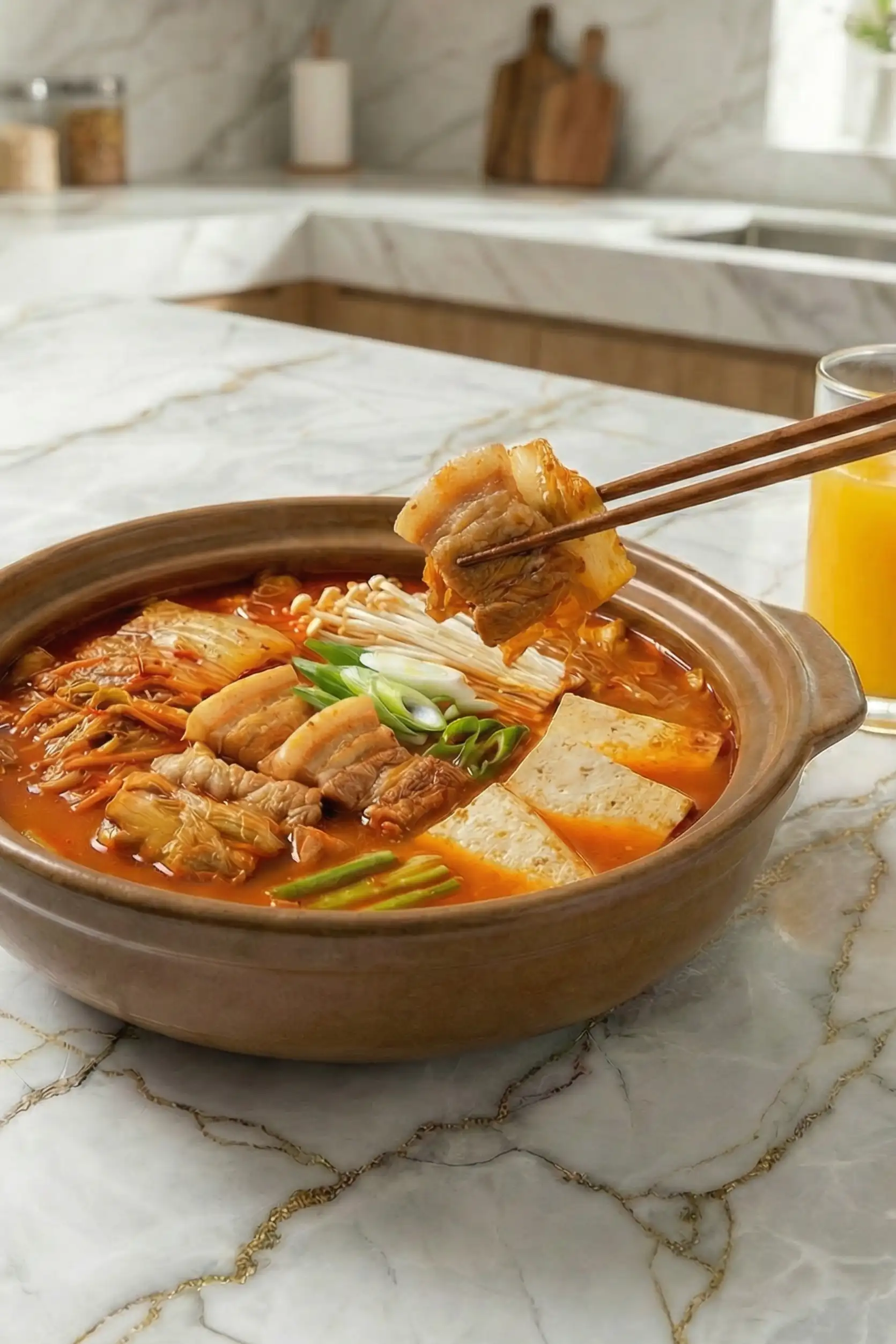
Kimchi jjigae is one of those soups that feels like a warm hug on a cold evening, and honestly, it’s become a staple in my kitchen whenever I have a jar of aged kimchi sitting in the fridge that needs a purpose. The older the kimchi, the better this soup gets, it turns funky and sour in the best possible way once everything simmers together. I made this on a rainy weeknight recently and it was exactly what I needed.
This kimchi soup is built on a short list of pantry-friendly ingredients, takes about 45 minutes from start to finish, and packs a spicy, savory punch that’s hard to beat. Silken tofu adds a soft, pillowy contrast to the broth while gochujang and gochugaru give it that signature Korean heat. If you’ve never made kimchi jjigae at home before, I promise it’s much simpler than it looks.
Ingredients
- 1/2 cup kimchi, roughly chopped
- 2 tablespoons kimchi brine
- 5 oz medium-firm tofu, sliced into 1/2-inch pieces
- 1/4 onion, thinly sliced
- 5 garlic cloves, minced
- 1 green onion, thinly sliced
- 1 1/2 cups vegetable stock
- 1/2 tablespoon gochujang
- 1 teaspoon gochugaru (Korean red chili flakes)
- 1 tablespoon light soy sauce
- 1/2 tablespoon fish sauce
- 1 1/2 teaspoons sesame oil
- 1 1/2 teaspoons sugar
- 1/2 teaspoon salt
How To Make Kimchi Jjigae
- Sauté the aromatics. Heat sesame oil in a medium pot over medium heat. Add the thinly sliced onion and cook for 2 to 3 minutes until it softens and turns translucent. Stir in the minced garlic and cook another 30 seconds until fragrant.
- Add the kimchi and paste. Toss in the roughly chopped kimchi along with the gochujang. Stir everything together and cook for 3 to 4 minutes, letting the kimchi caramelize slightly at the edges. This step is where a lot of the flavor develops, so don’t rush it.
- Season and bloom the spice. Sprinkle in the gochugaru and sugar, then stir to coat the kimchi evenly. The sugar balances out the acidity and rounds the heat nicely.
- Pour in the stock and brines. Add the vegetable stock, kimchi brine, soy sauce, fish sauce, and salt. Stir well and bring the soup to a gentle boil over medium-high heat.
- Simmer the broth. Once boiling, reduce the heat to medium-low and let the soup simmer uncovered for 10 minutes. The broth will deepen in color and the flavors will come together.
- Add the tofu. Gently slide in the tofu slices. Simmer for another 5 minutes without stirring too aggressively, tofu breaks apart easily and you want those soft cubes intact.
- Finish and serve. Taste and adjust seasoning if needed. Ladle the soup into bowls and top with freshly sliced green onion. Serve immediately with steamed white rice on the side.
What Makes a Good Kimchi Jjigae
The single biggest factor in how your kimchi jjigae turns out is the age of your kimchi. Fresh kimchi works, but it produces a milder, less complex broth. Kimchi that’s been fermenting in your fridge for 3 to 4 weeks, sometimes called over-ripened or well-fermented kimchi, is the real star here. It’s more sour, more pungent, and it breaks down beautifully into the broth as it cooks.
Don’t skip the kimchi brine either. That liquid is packed with fermented flavor and adds an extra layer of depth that plain kimchi alone can’t replicate. A couple tablespoons go a long way.
Tofu Tips for Kimchi Soup
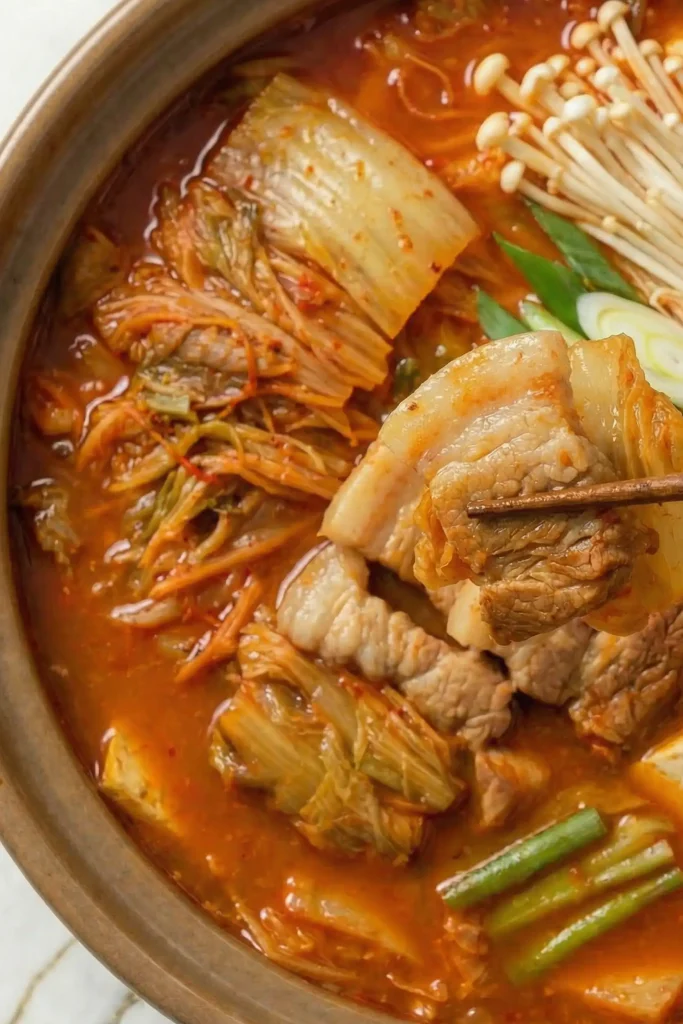
Medium-firm tofu is the sweet spot for this recipe. Silken tofu is too delicate and tends to dissolve into the broth, while extra-firm tofu can feel a bit rubbery and doesn’t absorb the broth as well. Medium-firm holds its shape, stays soft on the inside, and soaks up all that spicy red broth beautifully.
If you want a slightly firmer texture, press the tofu lightly with paper towels before adding it to the pot. It won’t change the flavor much but it does help the pieces stay a bit more intact during cooking.
How to Make It Vegan
This recipe is already very close to fully plant-based, just swap the fish sauce for an extra splash of soy sauce or use a dedicated vegan fish sauce substitute (mushroom-based ones work great). The rest of the ingredients are naturally vegan, including the gochujang, gochugaru, and vegetable stock.
You’d be surprised how little you actually miss the fish sauce once everything else is in the pot. The kimchi brine, gochujang, and soy sauce create enough savory depth on their own. For another vegan-friendly Korean-inspired dish, check out this Korean Gochujang Cauliflower recipe, it uses a similar flavor base and works really well as a side.
What to Serve with Kimchi Jjigae
Steamed short-grain white rice is the classic pairing, and honestly, it’s the one I always come back to. The plain rice soaks up the spicy broth and balances the heat. You can also serve it with a simple bowl of rice and a few banchan (small Korean side dishes) on the side if you want to go all out.
If you’re keeping things simple, even just steamed rice and a fried egg on top makes this a complete, satisfying meal. For a lighter pairing, a side salad or a vegetable dish rounds things out without competing with all that bold broth. And if you love building out a full bowl-style dinner, this Creamy Gochujang Sauce is worth bookmarking as a drizzle for the rice alongside the stew.
Quick Tips
- Use aged kimchi for the best flavor. Fresh kimchi produces a lighter, less complex broth.
- Don’t skip the kimchi brine. It adds a concentrated tangy flavor that makes the broth taste like it simmered for hours.
- Fish sauce is optional if you want to keep the dish vegetarian. Replace it with an extra splash of soy sauce or a small piece of kombu added to the stock.
- Make it ahead. This stew stores well in the fridge for up to 3 days. The flavor actually improves overnight.
- Freezing tip. If freezing leftovers, remove the tofu first. It changes texture when frozen and thawed. Add fresh tofu when reheating.
- One pot only. No need for extra pans or complicated prep. Everything builds in a single pot from start to finish.
- Serving size. This recipe serves 2 as a main dish with rice. Double the quantities easily if cooking for more people.
Recipe FAQs
Can I make kimchi jjigae ahead of time?
Yes, and it’s actually recommended. The soup keeps well in the fridge for up to 3 days and the flavor only improves overnight. Reheat on the stovetop over low heat, adding a splash of water or stock if the broth has thickened.
Can I freeze kimchi soup?
You can freeze it, though the tofu texture will change after thawing and become slightly spongier and more crumbly. If that bothers you, freeze the broth base without the tofu and add fresh tofu when reheating. It keeps in the freezer for up to 2 months.
What can I use instead of fish sauce?
Soy sauce is the most straightforward swap in a 1:1 ratio. For a closer flavor match, try a small amount of miso paste dissolved in warm water, or a dedicated vegan fish sauce made from seaweed or mushrooms.
Why is my kimchi jjigae broth too sour?
The sourness comes from the fermented kimchi and kimchi brine. If it’s too tart for your taste, a small pinch of extra sugar can balance things out without dulling the heat. You can also reduce the amount of kimchi brine next time or use slightly fresher kimchi.
Print
Kimchi Jjigae Recipe | Kimchi Soup Recipe
- Total Time: 45 minutes
- Yield: 3 servings 1x
Ingredients
- 1/2 cup kimchi, roughly chopped
- 2 tablespoons kimchi brine
- 5 oz medium-firm tofu, sliced into 1/2-inch pieces
- 1/4 onion, thinly sliced
- 5 garlic cloves, minced
- 1 green onion, thinly sliced
- 1 1/2 cups vegetable stock
- 1/2 tablespoon gochujang
- 1 teaspoon gochugaru (Korean red chili flakes)
- 1 tablespoon light soy sauce
- 1/2 tablespoon fish sauce
- 1 1/2 teaspoons sesame oil
- 1 1/2 teaspoons sugar
- 1/2 teaspoon salt
Instructions
- Sauté the aromatics. Heat sesame oil in a medium pot over medium heat. Add the thinly sliced onion and cook for 2 to 3 minutes until it softens and turns translucent. Stir in the minced garlic and cook another 30 seconds until fragrant.
- Add the kimchi and paste. Toss in the roughly chopped kimchi along with the gochujang. Stir everything together and cook for 3 to 4 minutes, letting the kimchi caramelize slightly at the edges. This step is where a lot of the flavor develops, so don’t rush it.
- Season and bloom the spice. Sprinkle in the gochugaru and sugar, then stir to coat the kimchi evenly. The sugar balances out the acidity and rounds the heat nicely.
- Pour in the stock and brines. Add the vegetable stock, kimchi brine, soy sauce, fish sauce, and salt. Stir well and bring the soup to a gentle boil over medium-high heat.
- Simmer the broth. Once boiling, reduce the heat to medium-low and let the soup simmer uncovered for 10 minutes. The broth will deepen in color and the flavors will come together.
- Add the tofu. Gently slide in the tofu slices. Simmer for another 5 minutes without stirring too aggressively, tofu breaks apart easily and you want those soft cubes intact.
- Finish and serve. Taste and adjust seasoning if needed. Ladle the soup into bowls and top with freshly sliced green onion. Serve immediately with steamed white rice on the side.
Notes
- Use aged kimchi for the best flavor. Fresh kimchi produces a lighter, less complex broth.
- Don’t skip the kimchi brine. It adds a concentrated tangy flavor that makes the broth taste like it simmered for hours.
- Fish sauce is optional if you want to keep the dish vegetarian. Replace it with an extra splash of soy sauce or a small piece of kombu added to the stock.
- Make it ahead. This stew stores well in the fridge for up to 3 days. The flavor actually improves overnight.
- Freezing tip. If freezing leftovers, remove the tofu first. It changes texture when frozen and thawed. Add fresh tofu when reheating.
- One pot only. No need for extra pans or complicated prep. Everything builds in a single pot from start to finish.
- Serving size. This recipe serves 2 as a main dish with rice. Double the quantities easily if cooking for more people.
- Prep Time: 15 minutes
- Cook Time: 30 minutes
- Category: Soup
- Method: Stovetop
- Cuisine: Korean
Nutrition
- Serving Size: 1 bowl (400 g)
- Calories: 350 kcal
- Sugar: 5 g
- Sodium: 1200 mg
- Fat: 20 g
- Saturated Fat: 7 g
- Unsaturated Fat: 12 g
- Trans Fat: 0 g
- Carbohydrates: 15 g
- Fiber: 4 g
- Protein: 20 g
- Cholesterol: 60 mg