
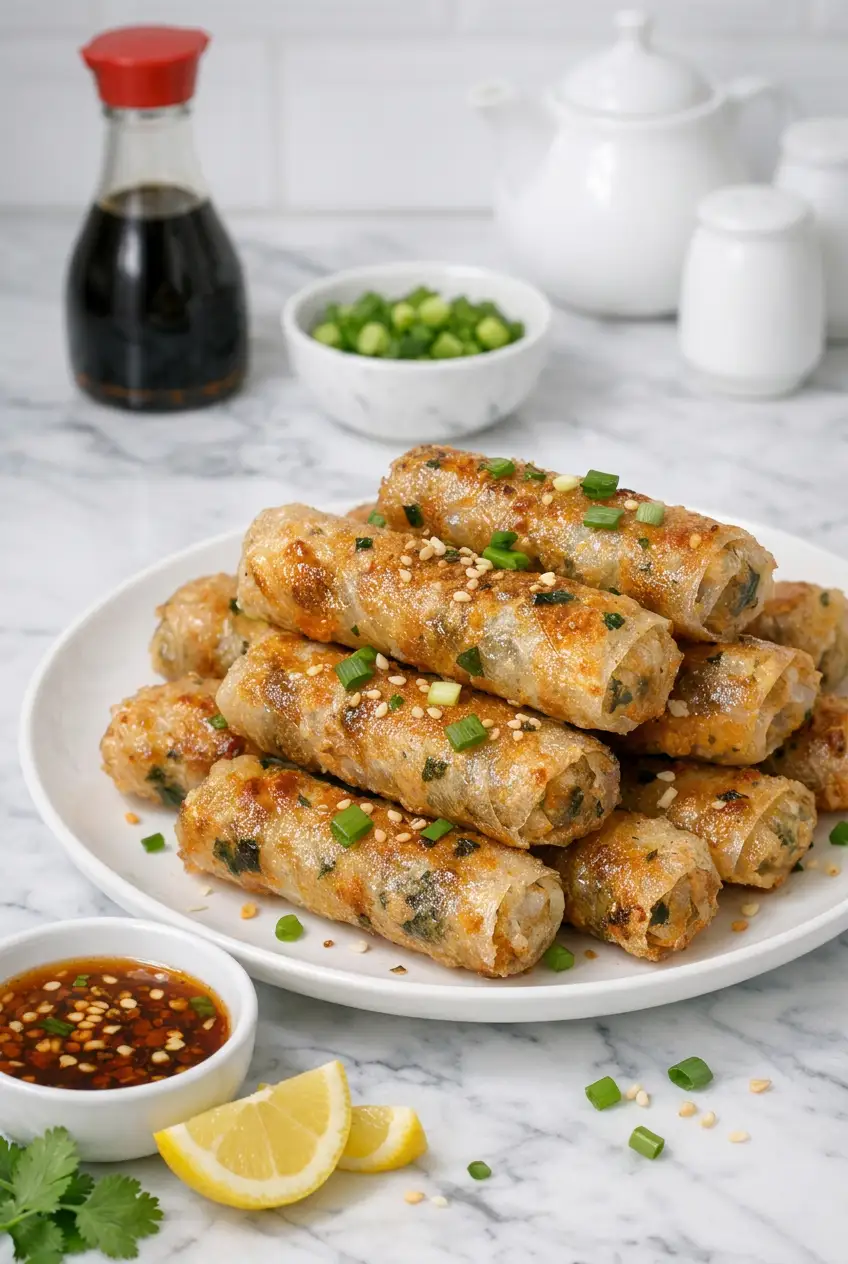
Easy Vietnamese fried spring rolls, or chả giò, are one of those dishes I keep coming back to no matter the season. I made a big batch for a family dinner last Lunar New Year and watched them disappear in minutes, nobody even sat down first. The filling is a savory mix of ground chicken, minced shrimp, glass noodles, wood ear mushrooms, and a handful of fresh vegetables, all wrapped snugly in rice paper and fried until shatteringly golden.
What I love most is how approachable this recipe actually is once you get the wrapping rhythm down. Yes, there are a few components, the pickled vegetables, the dipping sauce, the filling, but none of them are complicated on their own. And that nước chấm at the end? It pulls absolutely everything together. If you’ve been putting this recipe off because it seemed too involved, I promise you it’s worth the afternoon.
Ingredients
For the Filling
- 1 lb ground chicken
- 1/2 lb shrimp, minced
- 1 egg
- 2 tbsp fish sauce
- 1 tsp white pepper
- 1/2 tsp salt
- 1 tsp sugar
- 1/4 cup shallots, minced
- 3 scallions (white parts), minced
- 2–3 garlic cloves, minced
- 1/4 cup shredded carrots
- 1/4 cup wood ear mushrooms, thinly sliced
- 1.5 oz (1 bundle) mung bean vermicelli noodles
For Wrapping
- 20–24 rice paper sheets
- 6 cups warm water
- 3 tbsp sugar
For Frying
- Peanut oil (enough for deep frying)
Pickled Vegetables (Đồ Chua)
- 1/2 cup julienned carrots
- 1/2 cup julienned daikon radish
- 1/4 cup water
- 1/2 cup white vinegar
- 2 tbsp sugar
- 1/2 tsp salt
Dipping Sauce (Nước Chấm)
- 2 tbsp fish sauce
- 1 tbsp sugar
- 1 lime, juiced
- 1 garlic clove, minced
- 1–2 tsp minced bird’s eye chili or serrano pepper
- 1 tsp rice vinegar
For Serving (Optional)
- Lettuce leaves
- Fresh mint
- Cilantro
- Perilla or shiso leaves
- Sliced cucumber
How To Make Vietnamese Fried Spring Rolls
Step 1: Make the pickled vegetables. Combine the vinegar, water, sugar, and salt in a small bowl and stir until the sugar dissolves completely. Add the julienned carrots and daikon, press them down so they’re submerged, and set aside for at least 30 minutes. The vegetables will soften slightly and take on a tangy, lightly sweet flavor.
Step 2: Soak the noodles and mushrooms. Place the vermicelli bundle and wood ear mushrooms in separate bowls and cover both with hot water. Let them soak for 10–15 minutes until soft. Drain well, then roughly chop the noodles into 1-inch pieces and finely mince the mushrooms. Squeeze out any extra moisture with your hands.
Step 3: Mix the filling. In a large bowl, combine the ground chicken, minced shrimp, noodles, mushrooms, carrots, shallots, scallions, and garlic. Add the egg, fish sauce, white pepper, salt, and sugar. Mix everything together with clean hands until just combined, don’t overwork it. The filling should hold together when pressed into a small ball.
Step 4: Mix the soaking water. Stir the 3 tablespoons of sugar into 6 cups of warm water until dissolved. This lightly sweetened water helps the rice paper become pliable without getting too sticky or tearing.
Step 5: Soften the rice paper. Working one sheet at a time, dip a rice paper round into the sugared warm water for about 5 seconds, just long enough to soften it. Lay it flat on a clean, slightly damp kitchen towel. Don’t soak it too long or it’ll tear when you roll.
Step 6: Fill and roll. Place about 2 tablespoons of filling near the bottom third of the wrapper. Fold the bottom edge up and over the filling, then fold in both sides. Roll upward firmly but gently to seal. Don’t pack the filling too tight, the noodles expand slightly during frying and rolls packed too firmly can burst.
Step 7: First fry. Pour peanut oil into a deep pan or wok to a depth of about 2–3 inches and heat to 325°F (165°C). Fry the rolls in small batches, turning occasionally, for about 5 minutes until they turn a pale golden color. Don’t crowd the pan. Remove and drain on a wire rack or paper towel, then let them cool for a few minutes.
Step 8: Second fry. Raise the oil temperature to 350°F (175°C). Return the rolls in batches and fry again for 1.5–2 minutes until deeply golden and crispy all over. The double fry is what gives chả giò that signature crunch that stays even as they cool.
Step 9: Make the dipping sauce. Stir together the fish sauce, sugar, and lime juice until the sugar dissolves. Add the minced garlic, chili, and rice vinegar. Taste and adjust, it should be a balance of salty, sweet, sour, and just a little heat.
Step 10: Serve. Arrange the rolls on a platter with fresh lettuce, mint, cilantro, perilla leaves, and sliced cucumber on the side. Serve immediately with the pickled vegetables and nước chấm.
What’s in Vietnamese Fried Spring Rolls
The filling for chả giò varies a bit from household to household, but this version uses ground chicken and minced shrimp as the protein base, which gives a lighter flavor than the more traditional pork and shrimp combination. Mung bean vermicelli noodles and wood ear mushrooms add chewiness and a subtle earthiness that rounds out the whole thing.
The vegetables, shredded carrots, minced shallots, scallions, and garlic, give the filling texture and keep it from feeling dense. Everything gets seasoned simply with fish sauce, white pepper, salt, and just a touch of sugar. It’s a short ingredient list that produces a surprisingly layered, savory filling.
The wrappers are made from dried rice paper (bánh tráng), which fry up distinctly light and crackly compared to wheat-based egg roll wrappers. Some cooks prefer the wheat version for ease, but the rice paper version is traditional, and once you get the hang of the quick soak, it’s not hard at all.
The Double-Fry Method for Extra Crispiness
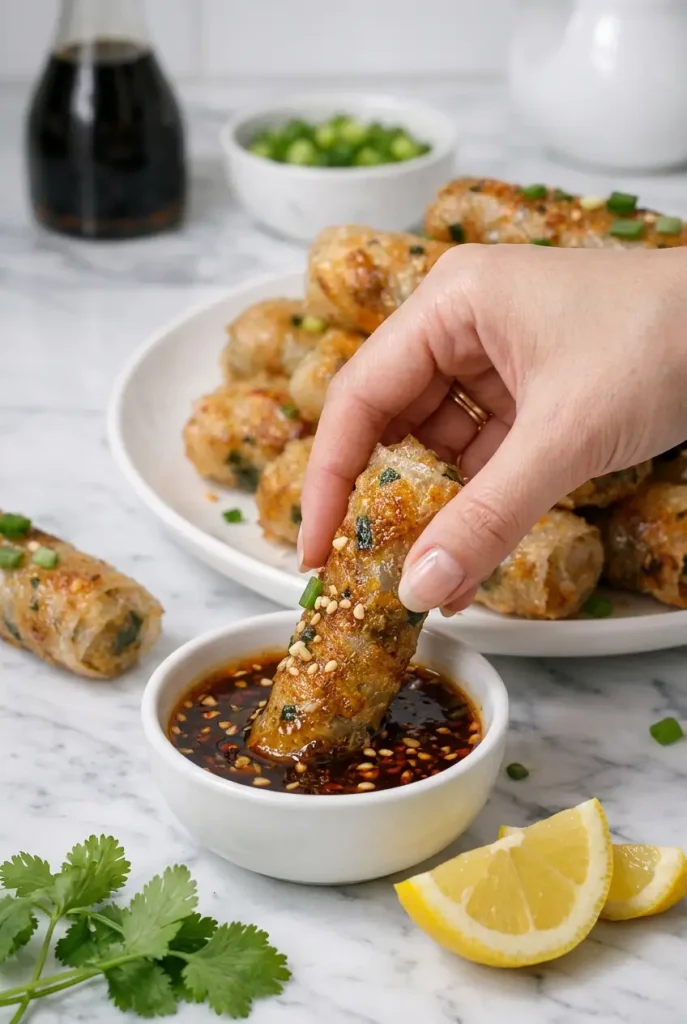
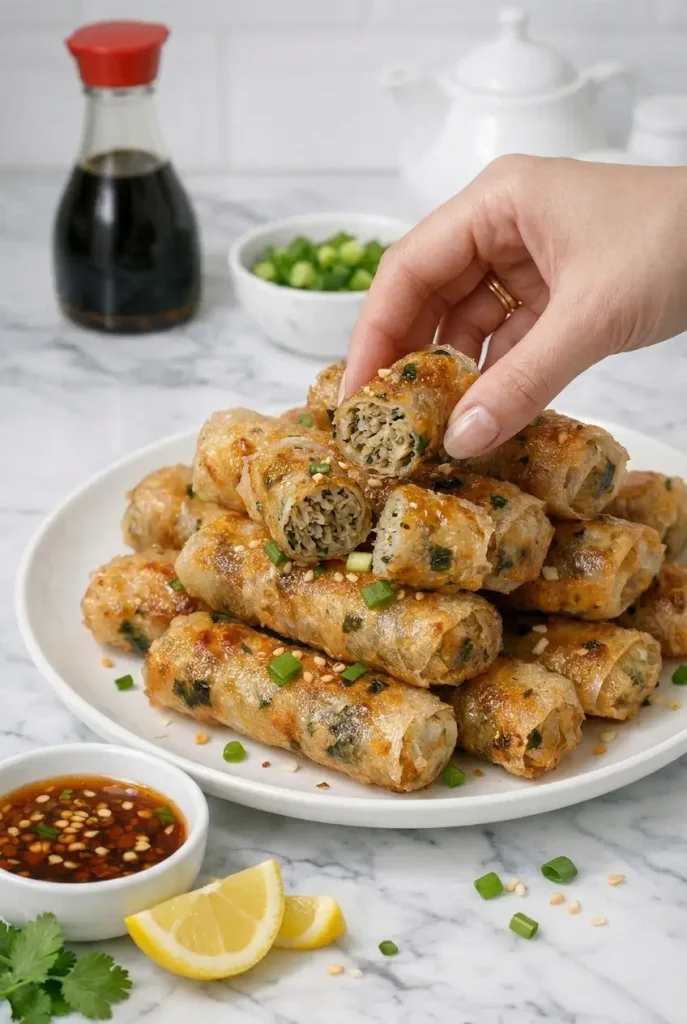
One of the most common mistakes with homemade fried spring rolls is frying them just once at high heat and ending up with rolls that are greasy or unevenly cooked. The double-fry method solves both problems. The first fry at a lower temperature (around 325°F) cooks the filling through and sets the wrapper without browning it too fast. The second fry at 350°F gives you that deep, even golden crust.
This technique also makes the recipe more practical for entertaining. You can do the first fry an hour or two ahead, let the rolls drain and rest, then do the second fry right before serving. The rolls come out crisp and hot without you having to stand over the stove all night.
If you’re reheating leftovers the next day, skip the microwave entirely. A 350°F oven or air fryer for 5–7 minutes brings back most of the crunch without drying out the filling.
How to Serve Fried Spring Rolls (Chả Giò)
At a Vietnamese table, chả giò are rarely eaten on their own. The most traditional way is to wrap a whole roll (or a piece of it) in a lettuce leaf along with fresh herbs, mint, cilantro, perilla leaves, and a few slices of cucumber. You dip the whole bundle into nước chấm before each bite. The cool, fresh herbs against the hot, crispy roll is a contrast that’s hard to beat.
The pickled vegetables (đồ chua) are typically served on the side as a palate cleanser between bites. The acidity cuts through the richness of the fried rolls and keeps everything from feeling heavy. I always make at least a full cup of the pickled daikon and carrots because people end up eating them by the forkful.
You can also serve these over a bowl of rice vermicelli with sliced cucumbers, bean sprouts, and extra nước chấm as a dressing, that dish is called bún chả giò, and it makes a satisfying full meal.
Make-Ahead and Storage Tips
These rolls are genuinely better when made in a big batch. You can roll them raw, arrange them in a single layer on a parchment-lined baking sheet, freeze until solid (about an hour), then transfer to a zip-top bag. Frozen raw rolls go straight from the freezer into hot oil, no thawing needed. They fry up just as well as fresh, and having a stash in the freezer means you’re always 10 minutes from a plate of crispy spring rolls.
If you’ve already fried them, the rolls keep reasonably well in the fridge for 2–3 days in an airtight container. A quick pass through a 350°F air fryer or oven revives the crunch. I wouldn’t recommend refrigerating the raw soaked-and-rolled ones overnight, the rice paper can become gummy where it’s folded.
Quick Tips
- Squeeze the soaked noodles and mushrooms as dry as possible before adding them to the filling. Extra moisture in the filling causes the wrapper to soften from the inside out during frying.
- Add a teaspoon of white vinegar to the soaking water for the rice paper, it’s a Vietnamese home cook trick that helps the wrappers stay crispier after frying.
- Don’t roll too tightly. Leave just a little room for the noodles to expand, or the rolls may crack open in the oil.
- Fry in small batches (4–5 rolls at a time max). Adding too many at once drops the oil temperature and the rolls absorb more oil instead of crisping up.
- A digital thermometer takes the guesswork out of oil temperature and is worth the investment if you fry regularly.
- The pickled vegetables can be made up to a week ahead and stored in the fridge in a sealed jar.
- For a complete meal prep, roll and freeze two batches at a time so you always have some on hand.
Recipe FAQs
Can I use a different protein in the filling?
Ground pork is the most traditional choice and works beautifully here. You can also use a pork-and-shrimp combination, or go all shrimp if you prefer. Some regional versions add fresh crab meat. Just keep the total weight around 1.5 lbs so the seasoning ratios stay balanced.
Why do my spring rolls burst open in the oil?
This usually comes from rolling too tightly, overfilling, or trapping air bubbles inside. Make sure to press gently along the seam as you roll to push out any air pockets. Also check that your filling isn’t too wet, give the noodles and mushrooms an extra squeeze before mixing.
Can I bake or air fry these instead of deep frying?
You can, but the texture will be noticeably different. Air frying at 390°F for about 12–15 minutes (flipping halfway) gives you a reasonably crispy result. Brush or lightly spray the rolls with oil first. Baking works too but produces a drier, less golden exterior. Deep frying in peanut oil is still the best way to get that authentic crackly crust.
How long does the dipping sauce keep?
The nước chấm keeps well in the fridge for up to a week in a sealed jar. Give it a stir before serving since the sugar and lime juice can settle. It’s worth making a double batch, it’s good on practically everything.
Print
Easy Vietnamese Fried Spring Rolls (Chả Giò)
- Total Time: 50 minutes
- Yield: 25 spring 1x
Ingredients
For the Filling
- 1 lb ground chicken
- 1/2 lb shrimp, minced
- 1 egg
- 2 tbsp fish sauce
- 1 tsp white pepper
- 1/2 tsp salt
- 1 tsp sugar
- 1/4 cup shallots, minced
- 3 scallions (white parts), minced
- 2–3 garlic cloves, minced
- 1/4 cup shredded carrots
- 1/4 cup wood ear mushrooms, thinly sliced
- 1.5 oz (1 bundle) mung bean vermicelli noodles
For Wrapping
- 20–24 rice paper sheets
- 6 cups warm water
- 3 tbsp sugar
For Frying
- Peanut oil (enough for deep frying)
Pickled Vegetables (Đồ Chua)
- 1/2 cup julienned carrots
- 1/2 cup julienned daikon radish
- 1/4 cup water
- 1/2 cup white vinegar
- 2 tbsp sugar
- 1/2 tsp salt
Dipping Sauce (Nước Chấm)
- 2 tbsp fish sauce
- 1 tbsp sugar
- 1 lime, juiced
- 1 garlic clove, minced
- 1–2 tsp minced bird’s eye chili or serrano pepper
- 1 tsp rice vinegar
For Serving (Optional)
- Lettuce leaves
- Fresh mint
- Cilantro
- Perilla or shiso leaves
- Sliced cucumber
Instructions
Step 1: Make the pickled vegetables. Combine the vinegar, water, sugar, and salt in a small bowl and stir until the sugar dissolves completely. Add the julienned carrots and daikon, press them down so they’re submerged, and set aside for at least 30 minutes. The vegetables will soften slightly and take on a tangy, lightly sweet flavor.
Step 2: Soak the noodles and mushrooms. Place the vermicelli bundle and wood ear mushrooms in separate bowls and cover both with hot water. Let them soak for 10–15 minutes until soft. Drain well, then roughly chop the noodles into 1-inch pieces and finely mince the mushrooms. Squeeze out any extra moisture with your hands.
Step 3: Mix the filling. In a large bowl, combine the ground chicken, minced shrimp, noodles, mushrooms, carrots, shallots, scallions, and garlic. Add the egg, fish sauce, white pepper, salt, and sugar. Mix everything together with clean hands until just combined, don’t overwork it. The filling should hold together when pressed into a small ball.
Step 4: Mix the soaking water. Stir the 3 tablespoons of sugar into 6 cups of warm water until dissolved. This lightly sweetened water helps the rice paper become pliable without getting too sticky or tearing.
Step 5: Soften the rice paper. Working one sheet at a time, dip a rice paper round into the sugared warm water for about 5 seconds, just long enough to soften it. Lay it flat on a clean, slightly damp kitchen towel. Don’t soak it too long or it’ll tear when you roll.
Step 6: Fill and roll. Place about 2 tablespoons of filling near the bottom third of the wrapper. Fold the bottom edge up and over the filling, then fold in both sides. Roll upward firmly but gently to seal. Don’t pack the filling too tight, the noodles expand slightly during frying and rolls packed too firmly can burst.
Step 7: First fry. Pour peanut oil into a deep pan or wok to a depth of about 2–3 inches and heat to 325°F (165°C). Fry the rolls in small batches, turning occasionally, for about 5 minutes until they turn a pale golden color. Don’t crowd the pan. Remove and drain on a wire rack or paper towel, then let them cool for a few minutes.
Step 8: Second fry. Raise the oil temperature to 350°F (175°C). Return the rolls in batches and fry again for 1.5–2 minutes until deeply golden and crispy all over. The double fry is what gives chả giò that signature crunch that stays even as they cool.
Step 9: Make the dipping sauce. Stir together the fish sauce, sugar, and lime juice until the sugar dissolves. Add the minced garlic, chili, and rice vinegar. Taste and adjust, it should be a balance of salty, sweet, sour, and just a little heat.
Step 10: Serve. Arrange the rolls on a platter with fresh lettuce, mint, cilantro, perilla leaves, and sliced cucumber on the side. Serve immediately with the pickled vegetables and nước chấm.
Notes
- Squeeze the soaked noodles and mushrooms as dry as possible before adding them to the filling. Extra moisture in the filling causes the wrapper to soften from the inside out during frying.
- Add a teaspoon of white vinegar to the soaking water for the rice paper, it’s a Vietnamese home cook trick that helps the wrappers stay crispier after frying.
- Don’t roll too tightly. Leave just a little room for the noodles to expand, or the rolls may crack open in the oil.
- Fry in small batches (4–5 rolls at a time max). Adding too many at once drops the oil temperature and the rolls absorb more oil instead of crisping up.
- A digital thermometer takes the guesswork out of oil temperature and is worth the investment if you fry regularly.
- The pickled vegetables can be made up to a week ahead and stored in the fridge in a sealed jar.
- For a complete meal prep, roll and freeze two batches at a time so you always have some on hand.
- Prep Time: 30 minutes
- Cook Time: 20 minutes
- Category: Snack
- Method: Deep-frying
- Cuisine: Vietnamese
Nutrition
- Serving Size: 2 spring rolls
- Calories: 180 kcal
- Sugar: 2 g
- Sodium: 320 mg
- Fat: 10 g
- Saturated Fat: 2.5 g
- Unsaturated Fat: 6.5 g
- Trans Fat: 0 g
- Carbohydrates: 16 g
- Fiber: 1 g
- Protein: 7 g
- Cholesterol: 35 mg