
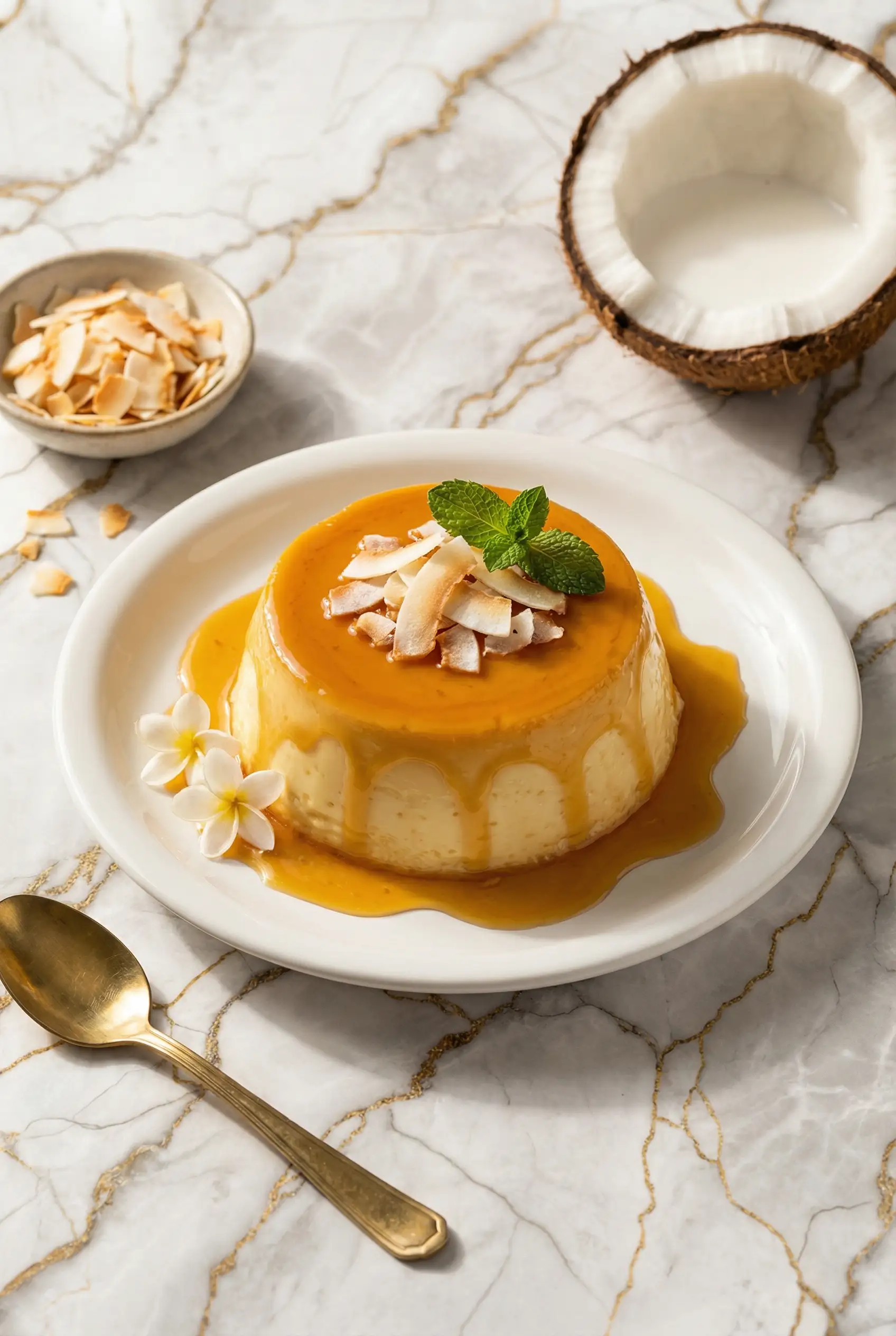
Coconut flan, or flan de coco, is one of those desserts I keep coming back to whenever I want something that feels a little special without a lot of effort. The first time I had it was at a friend’s family gathering, served straight from a big cake pan with that glossy amber caramel pooling around the edges. I was hooked instantly. It’s silky, gently sweet, and that coconut flavor comes through in the best possible way. This version adds an orange-rum caramel twist that honestly takes the whole thing to another level.
I love that this recipe works just as well for a Sunday dinner as it does for a dinner party. You make it the night before, let it chill, and by the time you flip it onto a plate you’ve got something that looks way more impressive than the work it actually took. If you’re new to flan, don’t let the caramel step intimidate you. It moves fast, but it’s totally manageable, and the result is so worth it.
Ingredients
Orange Caramel Sauce
- 2 tablespoons freshly squeezed orange juice
- 6 tablespoons granulated sugar
- 2 tablespoons dark rum (or water as an alternative)
Coconut Flan
- 3 large eggs
- 1 can (14 oz) sweetened condensed milk
- ¾ can (9 oz) coconut milk, well shaken
- 1 tablespoon vanilla extract
- 4 tablespoons granulated sugar
- 1 can (12 oz) evaporated milk
- 1 pinch ground cinnamon
- ½ cup coconut rum (optional; substitute with coconut milk if omitted)
- 1 teaspoon kosher salt
How To Make Your Coconut Flan (Flan de Coco)
- Preheat the oven to 325°F (165°C). Place a rack in the center and set a large roasting pan nearby. You’ll need it for the water bath.
- Start the orange caramel. Add the 6 tablespoons of granulated sugar to a small, light-colored saucepan over medium heat. Let it melt without stirring. Once it starts to turn amber around the edges, gently swirl the pan. When it reaches a deep golden color, carefully pour in the orange juice and rum (stand back, it will spatter). Stir quickly with a heatproof spatula until smooth.
- Coat the pan. Immediately pour the caramel into a 9-inch round cake pan or a 9×5-inch loaf pan. Tilt the pan to coat the entire bottom in an even layer. Work fast; the caramel sets up quickly as it cools. Set the pan aside.
- Blend the flan base. Add the eggs, sweetened condensed milk, evaporated milk, coconut milk, coconut rum (if using), 4 tablespoons of granulated sugar, vanilla extract, ground cinnamon, and kosher salt to a blender. Blend on medium speed for about 30 seconds until everything is smooth and fully combined. Don’t over-blend or you’ll create too many air bubbles.
- Strain for silkiness. Pour the custard mixture through a fine mesh strainer into the caramel-coated pan. This step is optional but gives you a noticeably smoother texture.
- Set up the water bath. Place the flan pan inside the larger roasting pan. Carefully pour hot water into the roasting pan until it comes about halfway up the sides of the flan pan. The bain-marie keeps the custard cooking gently and evenly.
- Bake for 50 to 60 minutes. The flan is done when the edges are set but the center still has a slight jiggle, like Jell-O. Don’t wait for it to look completely firm in the oven; it will continue to set as it cools.
- Cool and chill. Remove the flan pan from the water bath and let it cool to room temperature, about 45 minutes. Then cover tightly with plastic wrap and refrigerate for at least 4 hours, ideally overnight.
- Unmold and serve. Run a thin knife around the edges of the flan. Place a large rimmed serving plate over the pan, then flip in one confident motion. The caramel will cascade down the sides. Slice into wedges and serve cold.
What Makes Flan de Coco Different from Regular Flan
Regular flan, or flan de leche, is the foundation. It’s a classic baked custard made with eggs, sweetened condensed milk, evaporated milk, and vanilla. Flan de coco takes that same base and swaps in coconut milk for a portion of the dairy, giving the custard a richer, slightly tropical flavor that you can’t quite put your finger on at first bite.
The coconut flavor in this version isn’t loud or overpowering. It’s more of a background note that sits underneath the sweetness, and it pairs beautifully with the caramel topping. If you want a stronger coconut punch, you can add a tablespoon of shredded toasted coconut as a garnish, or swap the evaporated milk entirely for a second can of coconut milk.
The orange-rum caramel here is what really sets this recipe apart from the more traditional preparations. Most coconut flan recipes use a plain sugar caramel, which is delicious on its own. But the orange juice adds just a little brightness that cuts through all that richness, and the rum gives it depth. It’s a small change with a noticeable payoff.
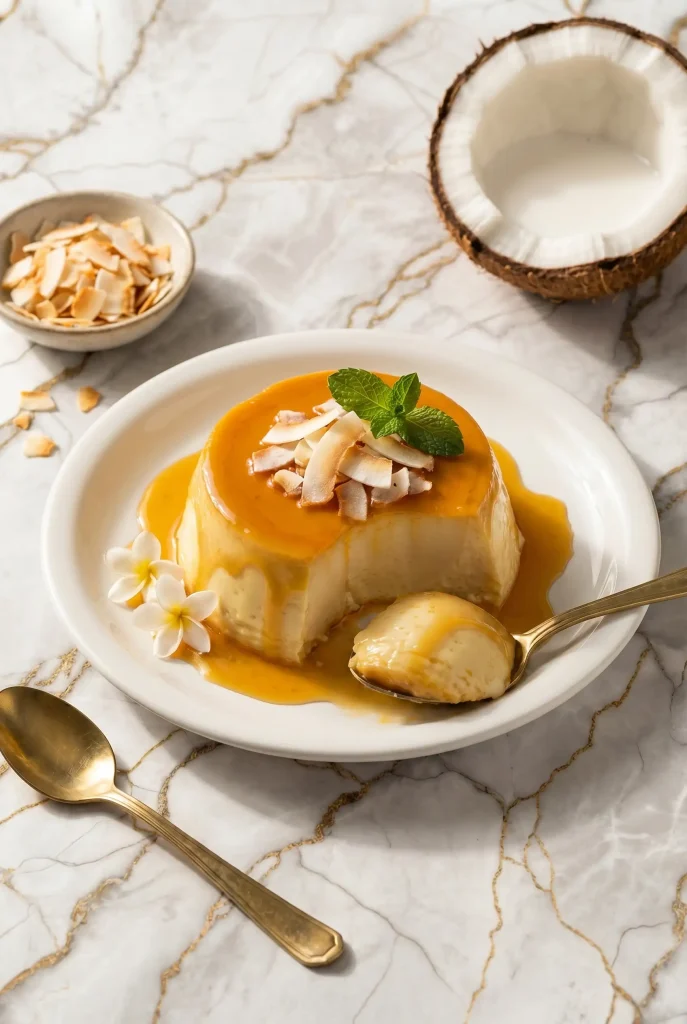
The Caramel Step, Explained
For a lot of people, the caramel is the most nerve-wracking part of making flan. And honestly? That reputation is fair. Sugar can go from perfect to burnt in a matter of seconds, and there’s no way to bring it back once it crosses that line.
The key is to stay close and trust your senses. You’re looking for a deep amber color, similar to the shade of iced tea. Too light and it won’t have much flavor. Too dark and it turns bitter. Once it hits that sweet spot, get it into the pan immediately because it will start to solidify as soon as it cools.
A few things to help: use a light-colored pan so you can actually see the color change clearly. Don’t stir the sugar once it’s melting; just swirl the pan if needed. And have your flan pan ready and waiting right next to the stove before you even turn on the heat. Speed matters here, so preparation is everything.
How to Know When Flan Is Done Baking
Flan is a custard, and custards can be tricky to gauge by appearance alone. The most reliable test is the jiggle test: when you gently shake the pan, the outer 2 inches should be set while the very center still wobbles like a soft gel. If the whole thing moves like liquid, it needs more time. If it doesn’t move at all, it’s probably overcooked.
You can also check with an instant-read thermometer. The internal temperature should be around 175°F to 180°F when it’s properly set.
One common mistake is leaving the flan in the oven too long. Overbaked flan develops a grainy, slightly rubbery texture instead of that smooth, almost-melting quality you’re after. Err on the side of underdone; the carry-over cooking and chilling time will finish the job. If you love creamy baked desserts, you might also enjoy this Strawberry Cheesecake Pudding for another chilled, no-stress option.
Serving, Storing, and Making It Ahead
Coconut flan is a great make-ahead dessert. In fact, it’s better the next day because the custard has more time to firm up and the caramel has a chance to soften slightly, creating more of that gorgeous sauce when you flip it. I almost always make it the night before for that reason alone.
Once unmolded, it’ll keep in the refrigerator, covered loosely, for up to 4 days. Store it on the serving plate and just cover it with a sheet of plastic wrap or a large inverted bowl. The caramel sauce will pool at the base and that’s perfectly fine; just spoon it back over individual slices when you serve.
Don’t freeze this one. Dairy-based custards don’t hold up in the freezer and will split when thawed, leaving you with a watery, grainy mess that can’t be fixed. Stick to the fridge and plan accordingly.
Quick Tips Before You Start
- Use full-fat coconut milk for the richest texture. Light coconut milk works but gives a thinner custard.
- Shake the can of coconut milk well before opening to recombine the solids and liquid.
- Strain the custard through a fine mesh sieve to remove air bubbles and any egg bits. This one step makes the texture noticeably smoother.
- Don’t skip the water bath. Direct oven heat will cause the eggs to scramble. The bain-marie is non-negotiable.
- Make it at least 4 hours ahead, but overnight is really the sweet spot.
- Have extra sugar on hand in case your first caramel attempt burns. It happens, even to experienced bakers, and you can start over in minutes.
- Garnish options include toasted shredded coconut, a light dusting of cinnamon, or a few thin orange slices on the side.
- This recipe scales well. Use individual ramekins for 8 single-serving flans, and reduce bake time to around 35 to 40 minutes.
FAQs Recipe
Can I make coconut flan ahead of time?
It’s actually recommended. Coconut flan needs at least 4 hours in the fridge to set properly, and the texture is even better after a full night of chilling. You can make it up to 2 days ahead and keep it covered in the refrigerator until you’re ready to serve.
Why is my flan rubbery or full of bubbles?
Rubbery texture usually means it was overbaked or the oven temperature was too high. Bubbles on the surface typically come from over-blending the custard or skipping the straining step. For a smooth, clean result, blend just until combined, strain the mixture, and bake low and slow in the water bath.
Can I skip the rum in the caramel?
Just replace the dark rum with the same amount of water. The caramel will still be delicious; you’ll just lose that subtle boozy depth. The orange juice stays in either way since it really does balance the sweetness.
How long does coconut flan keep in the fridge?
Stored covered in the refrigerator, it keeps well for up to 4 to 5 days. The caramel may get slightly more liquid over time as it draws moisture from the custard, but that’s normal and it still tastes great. Don’t freeze it; the texture won’t survive the thaw.
Print
Coconut Flan (Flan de Coco)
- Total Time: 1 hour 15 minutes
- Yield: 8 servings 1x
Ingredients
Orange Caramel Sauce
- 2 tablespoons freshly squeezed orange juice
- 6 tablespoons granulated sugar
- 2 tablespoons dark rum (or water as an alternative)
Coconut Flan
- 3 large eggs
- 1 can (14 oz) sweetened condensed milk
- ¾ can (9 oz) coconut milk, well shaken
- 1 tablespoon vanilla extract
- 4 tablespoons granulated sugar
- 1 can (12 oz) evaporated milk
- 1 pinch ground cinnamon
- ½ cup coconut rum (optional; substitute with coconut milk if omitted)
- 1 teaspoon kosher salt
Instructions
- Preheat the oven to 325°F (165°C). Place a rack in the center and set a large roasting pan nearby. You’ll need it for the water bath.
- Start the orange caramel. Add the 6 tablespoons of granulated sugar to a small, light-colored saucepan over medium heat. Let it melt without stirring. Once it starts to turn amber around the edges, gently swirl the pan. When it reaches a deep golden color, carefully pour in the orange juice and rum (stand back, it will spatter). Stir quickly with a heatproof spatula until smooth.
- Coat the pan. Immediately pour the caramel into a 9-inch round cake pan or a 9×5-inch loaf pan. Tilt the pan to coat the entire bottom in an even layer. Work fast; the caramel sets up quickly as it cools. Set the pan aside.
- Blend the flan base. Add the eggs, sweetened condensed milk, evaporated milk, coconut milk, coconut rum (if using), 4 tablespoons of granulated sugar, vanilla extract, ground cinnamon, and kosher salt to a blender. Blend on medium speed for about 30 seconds until everything is smooth and fully combined. Don’t over-blend or you’ll create too many air bubbles.
- Strain for silkiness. Pour the custard mixture through a fine mesh strainer into the caramel-coated pan. This step is optional but gives you a noticeably smoother texture.
- Set up the water bath. Place the flan pan inside the larger roasting pan. Carefully pour hot water into the roasting pan until it comes about halfway up the sides of the flan pan. The bain-marie keeps the custard cooking gently and evenly.
- Bake for 50 to 60 minutes. The flan is done when the edges are set but the center still has a slight jiggle, like Jell-O. Don’t wait for it to look completely firm in the oven; it will continue to set as it cools.
- Cool and chill. Remove the flan pan from the water bath and let it cool to room temperature, about 45 minutes. Then cover tightly with plastic wrap and refrigerate for at least 4 hours, ideally overnight.
- Unmold and serve. Run a thin knife around the edges of the flan. Place a large rimmed serving plate over the pan, then flip in one confident motion. The caramel will cascade down the sides. Slice into wedges and serve cold.
Notes
- Use full-fat coconut milk for the richest texture. Light coconut milk works but gives a thinner custard.
- Shake the can of coconut milk well before opening to recombine the solids and liquid.
- Strain the custard through a fine mesh sieve to remove air bubbles and any egg bits. This one step makes the texture noticeably smoother.
- Don’t skip the water bath. Direct oven heat will cause the eggs to scramble. The bain-marie is non-negotiable.
- Make it at least 4 hours ahead, but overnight is really the sweet spot.
- Have extra sugar on hand in case your first caramel attempt burns. It happens, even to experienced bakers, and you can start over in minutes.
- Garnish options include toasted shredded coconut, a light dusting of cinnamon, or a few thin orange slices on the side.
- This recipe scales well. Use individual ramekins for 8 single-serving flans, and reduce bake time to around 35 to 40 minutes.
- Prep Time: 15 minutes
- Cook Time: 60 minutes T
- Category: Dessert
- Method: Baking
- Cuisine: Latin American
Nutrition
- Serving Size: 1 slice
- Calories: 320 kcal
- Sugar: 32 g
- Sodium: 120 mg
- Fat: 14 g
- Saturated Fat: 10 g
- Unsaturated Fat: 4 g
- Trans Fat: 0 g
- Carbohydrates: 40 g
- Fiber: 1 g
- Protein: 7 g
- Cholesterol: 140 mg